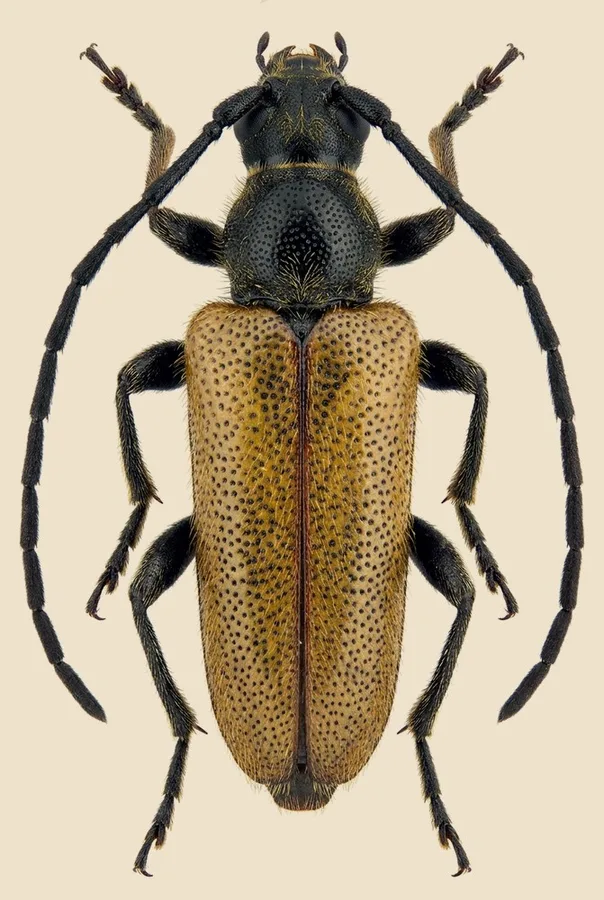
Fairy-ring longhorn beetle
This beetle's larvae grow not in dead wood like most longhorns, but underground in soil infested by the fungus that also produces fairy ring mushrooms.
| Where | Sunny meadows, pastures and roadsides |
|---|---|
| Size | 5 to 9 mm body length |
| When | May to July |
This small longhorn beetle has a black head and pronotum contrasting with reddish brown, finely haired elytra, and antennae slightly shorter than the body. It is broader bodied and darker legged than similar small longhorns found in the same open, flowery habitats.
Unlike most longhorn beetles, its larvae do not feed in dead wood but develop underground over two years in soil colonized by the fungus that produces fairy ring mushrooms. Adults visit flowers such as buttercups, umbels and ox eye daisy for pollen and nectar through summer.
Traits
Habitat
Grassland
Colour
Black, Brown
Active
Day
To people
Feeds on flower pollen and nectar and does not bite or sting people.
Activity through the year
Often confused with
Similar in length at about 6 to 10 mm, but narrower bodied with paler, reddish legs rather than the extensively dark legs of the Fairy-ring longhorn beetle.
Questions
Is the Fairy-ring longhorn beetle dangerous to people?
Feeds on flower pollen and nectar and does not bite or sting people.
When can you see the Fairy-ring longhorn beetle?
The Fairy-ring longhorn beetle can be seen from May to July, by day.
Plate retouched from a museum specimen photo by Uno Roosileht, Estonian Museum of Natural History, CC BY 4.0, GBIF Licence
Report a mistake in this entry
Beetles›Longhorn beetles›Pseudovadonia
Last updated 2026-09-26. Every entry is checked against published sources.