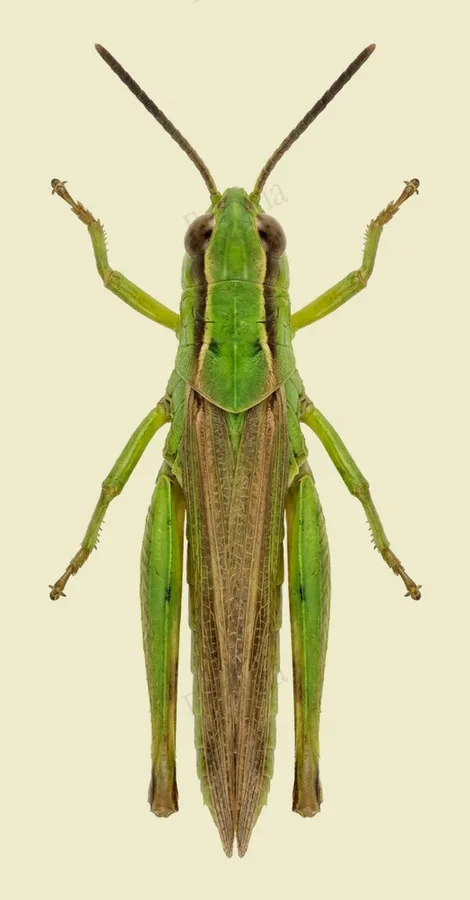
Meadow grasshopper
Despite living in open meadows, this grasshopper cannot fly at all, since both sexes keep wings too short to lift them off the ground.
| Where | Damp grasslands, meadows and roadsides |
|---|---|
| Size | 10 to 23 mm body length |
| When | June to September |
The Meadow Grasshopper is usually green, though brown and even pink-purple individuals occur, and its hind knees are marked black. The pronotum carries two nearly straight, parallel ridges, and males have longer wings than the short-winged females, though neither sex can fly.
Nymphs hatch in spring and adults become common in damp grassy meadows and roadsides by early summer, feeding on grass blades until the first frosts arrive. Males produce a soft, halting song by rubbing a hind leg against the forewing.
Traits
Habitat
Grassland
Colour
Green, Brown
Active
Day
To people
Common and harmless; feeds only on grass and poses no risk to people.
Activity through the year
Often confused with
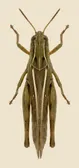
Its hind knees are a single plain colour rather than black, and it is fully winged and able to fly, unlike the short-winged Meadow Grasshopper.
Questions
Is the Meadow grasshopper dangerous to people?
Common and harmless; feeds only on grass and poses no risk to people.
When can you see the Meadow grasshopper?
The Meadow grasshopper can be seen from June to September, by day.
Plate retouched from a photo by Kostas Zontanos, CC BY 4.0, iNaturalist Licence
Report a mistake in this entry
Crickets and grasshoppers›Grasshoppers›Pseudochorthippus
Last updated 2026-09-26. Every entry is checked against published sources.