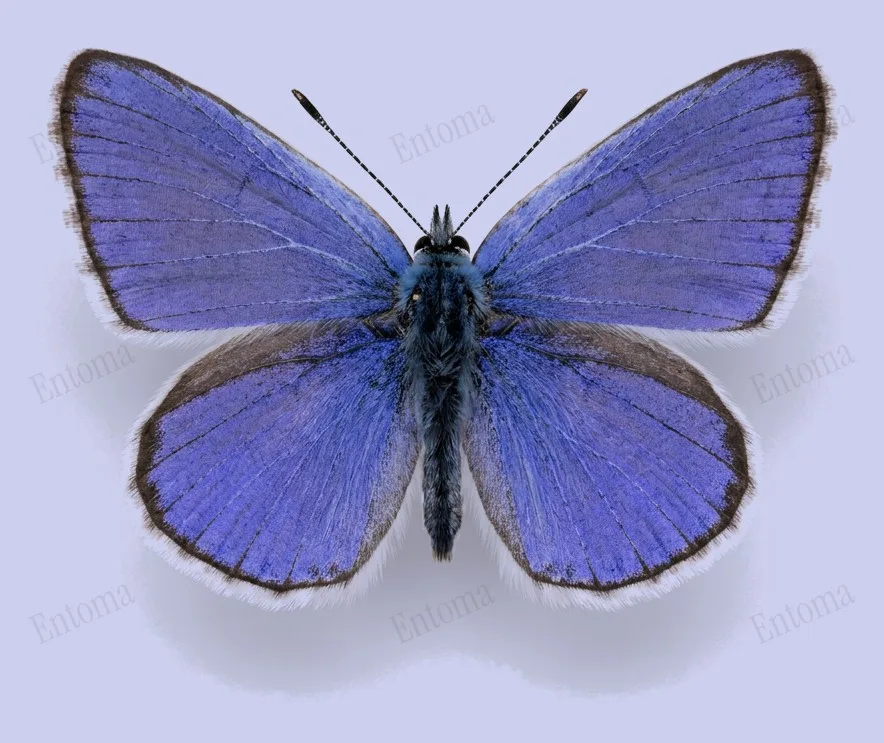
Common blue
Ants tend its caterpillars, drinking a sugary liquid they produce and guarding them in return.
| Where | Grassland, dunes, road verges, anywhere with bird's-foot trefoil |
|---|---|
| Size | 25 to 35 mm wingspan |
| When | May to September |
Only the male is bright blue. The female is mostly brown with orange spots along the wing edges, often dusted with blue near the body.
At dusk adults roost head down on grass stems, often several on one stalk.
Traits
Habitat
Grassland
Colour
Blue
Active
Day
To people
Harmless
Activity through the year
Often confused with
Pale silver-blue underneath with small black dots only, no orange.
Questions
Is the Common blue dangerous to people?
The Common blue is harmless to people.
When can you see the Common blue?
The Common blue can be seen from May to September, by day.
Plate retouched from a museum specimen photo by Olivia Parkman, University of Tartu, Natural History Museum and Botanical Garden, CC BY 4.0, GBIF Licence
Report a mistake in this entry
Butterflies and moths›Blues and coppers›Polyommatus
Last updated 2026-09-26. Every entry is checked against published sources.