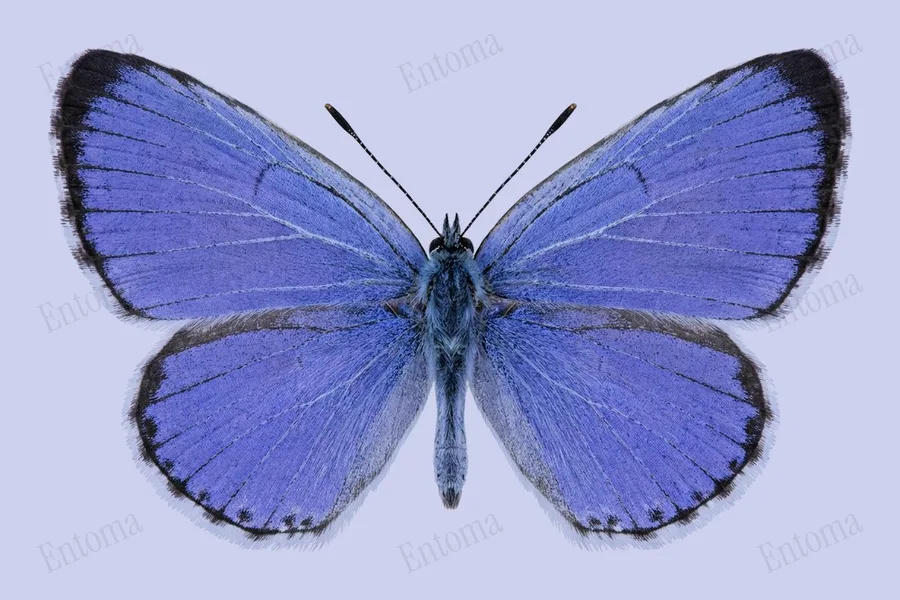
Holly blue
Its spring generation lays eggs on holly flower buds, while the summer generation switches almost entirely to ivy flowers to raise its caterpillars.
| Where | Gardens, woodland edges and hedgerows |
|---|---|
| Size | 26 to 35 mm wingspan |
| When | April to August |
The Holly blue has pale lilac-blue upperwings bordered with black, a margin that is narrow in males but broad in females. The underside is pale silvery blue with small black flecks and no orange spots, and the butterfly flies high around bushes and trees rather than low over grass like most other blues.
Two generations fly each year, one in spring and one in late summer. Spring females lay eggs on the flower buds of holly, while the summer brood switches almost entirely to ivy flowers, letting caterpillars track whichever host plant is in bud at the time.
Traits
Habitat
Garden
Colour
Blue, Black, White
Active
Day
To people
Often seen fluttering high around garden hedges and holly bushes; it poses no danger to people.
Activity through the year
Often confused with
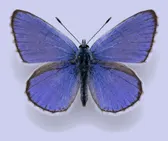
Close in size at about 28 to 36 mm wingspan, but its underside shows orange spots near the wing edge that the Holly blue lacks, and it flies low over grass rather than around bushes.
Questions
Is the Holly blue dangerous to people?
Often seen fluttering high around garden hedges and holly bushes; it poses no danger to people.
When can you see the Holly blue?
The Holly blue can be seen from April to August, by day.
Plate retouched from a museum specimen photo by Lauri Mällo, PlutoF, CC BY 4.0, GBIF Licence
Report a mistake in this entry
Butterflies and moths›Blues and coppers›Celastrina
Last updated 2026-09-26. Every entry is checked against published sources.