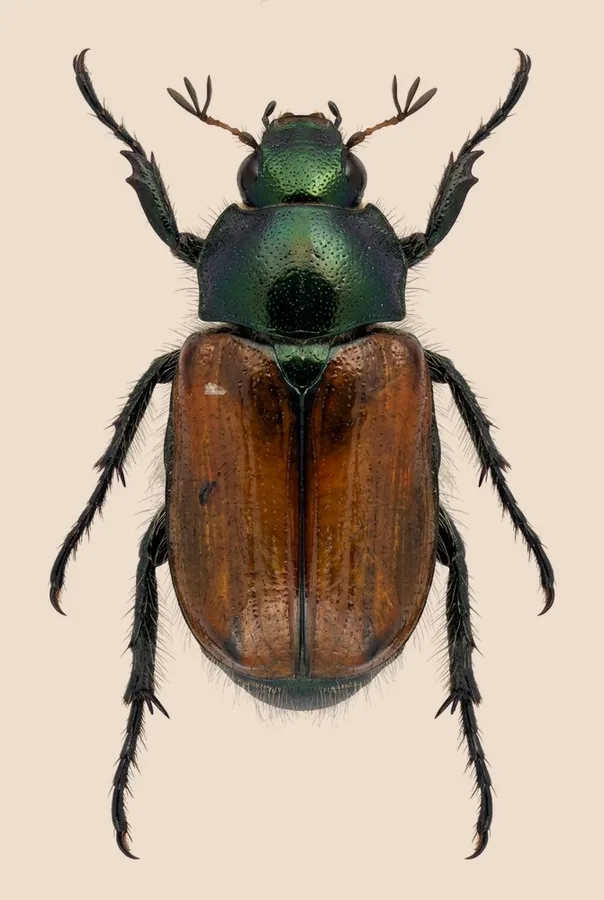
Garden chafer
In some years garden chafers erupt from lawns in dense buzzing swarms on warm afternoons, mating within days before the whole generation dies off.
| Where | Lawns, grassland and hedgerows |
|---|---|
| Size | 8 to 12 mm long |
| When | May to July |
It has a shiny metallic green to bronze head and thorax set against dull chestnut-brown, finely haired wing cases, with the fan-shaped clubbed antennae typical of chafers. Adults measure under 12 mm and have a rounder, less humped outline than larger chafer beetles.
Adults swarm over grassland and lawns to mate in early summer, and females lay eggs in the turf; the resulting white grubs feed on grass roots through summer and autumn before overwintering in the soil and pupating the next spring.
Traits
Habitat
Grassland
Colour
Metallic, Green, Brown
Active
Day
To people
Garden pest: grubs damage lawns and turf
Activity through the year
Often confused with
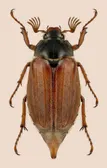
The cockchafer is far larger at 25 to 30 mm with reddish-brown wing cases and large fan-like antennal clubs, dwarfing the garden chafer's green-headed, under-12-mm body.
Questions
Is the Garden chafer dangerous to people?
Garden pest: grubs damage lawns and turf.
When can you see the Garden chafer?
The Garden chafer can be seen from May to July, by day.
Plate retouched from a photo by Francisco Welter-Schultes, CC0, Wikimedia Commons Licence
Report a mistake in this entry
Last updated 2026-09-26. Every entry is checked against published sources.