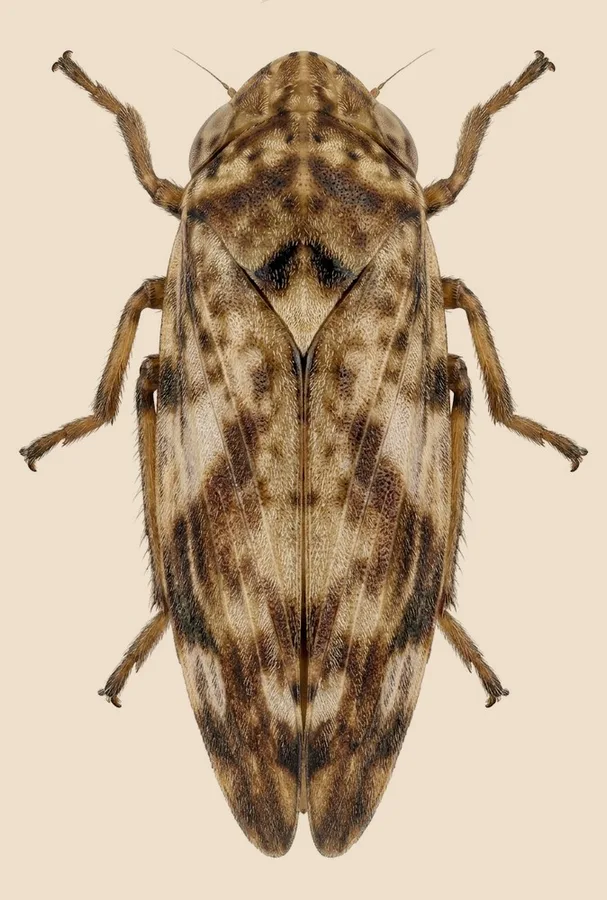
Meadow spittlebug
Its nymphs wrap themselves in frothy self-made spittle for protection, and adults leap many times their own body length once that cover is gone.
| Where | Grassland, gardens and open ground |
|---|---|
| Size | 5 to 7 mm long |
| When | May to September |
Adults are small, robust and oval, ranging from pale straw to dark mottled brown or nearly black, often with pale diagonal markings across the wing covers. The head is broad with bulging eyes, and the powerful hind legs give it a strong, sudden jump.
Nymphs feed on plant sap while hidden inside a mass of frothy secretion known as cuckoo spit, which shields them from predators and drying out until they moult into winged adults on an extremely wide range of host plants.
Traits
Habitat
Grassland
Colour
Brown, Yellow, Grey
Active
Day
To people
Harmless; froth on plants is just nymph shelter
Activity through the year
Often confused with
The lined spittlebug is more slender and plain brown with a pale stripe along the leading edge of the wing, and sticks to grasses rather than the meadow spittlebug's huge range of herb hosts.
Questions
Is the Meadow spittlebug dangerous to people?
Harmless; froth on plants is just nymph shelter.
When can you see the Meadow spittlebug?
The Meadow spittlebug can be seen from May to September, by day.
Plate retouched from a photo by Didier Descouens, CC BY‑SA 4.0, Wikimedia Commons Licence
The plate on this page is shared under the same licence as its source, CC BY-SA.
Report a mistake in this entry
True bugs›Spittlebugs›Philaenus
Last updated 2026-09-26. Every entry is checked against published sources.