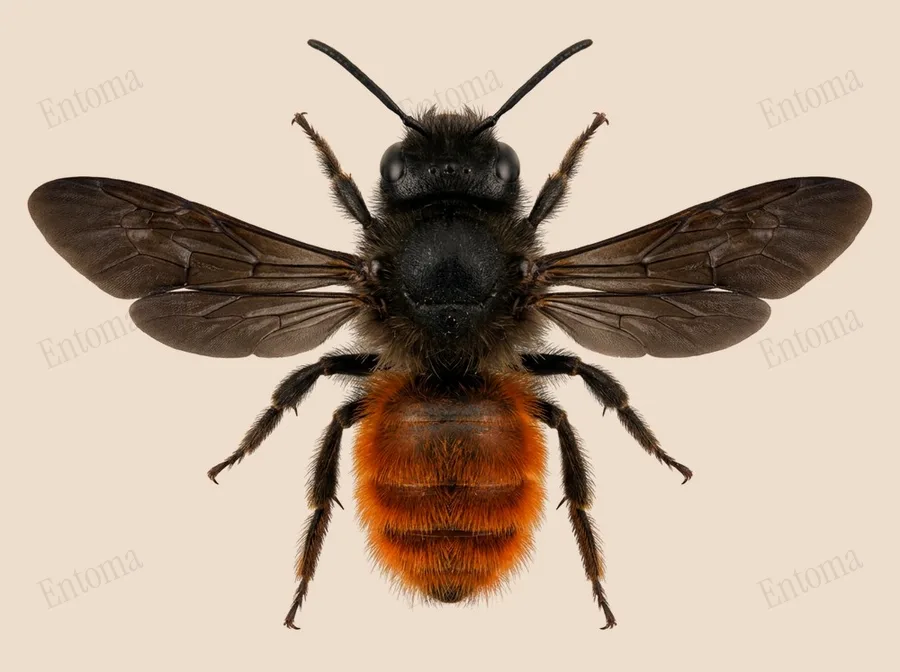
European orchard bee
Females use two small horns on their face to smooth the mud walls of their nest cells, a tool no other common European bee has.
| Where | Gardens, orchards, old walls |
|---|---|
| Size | 10 to 15 mm long |
| When | March to May |
Females are covered in black hair on the head and thorax with a rust-red hairy abdomen, and carry two short horns on the face that give the species its name.
It nests alone in existing cavities such as cracks in walls or hollow canes, sealing each brood cell with mud rather than building a hive.
Traits
Habitat
Garden
Colour
Black, Orange, Brown
Active
Day
To people
Mild
Females can sting if handled but the sting is mild and rare; not aggressive toward people.
Activity through the year
Often confused with
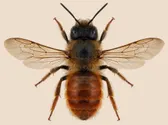
The red mason bee lacks the female orchard bee's two facial horns and usually starts flying about two to three weeks later in spring.
Questions
Is the European orchard bee dangerous to people?
Mild. Females can sting if handled but the sting is mild and rare; not aggressive toward people.
When can you see the European orchard bee?
The European orchard bee can be seen from March to May, by day.
Plate retouched from a photo by Lisa Nicvert, CC BY‑SA 4.0, Wikimedia Commons Licence
The plate on this page is shared under the same licence as its source, CC BY-SA.
Report a mistake in this entry
Bees, wasps and ants›Leafcutter bees›Osmia
Last updated 2026-09-26. Every entry is checked against published sources.