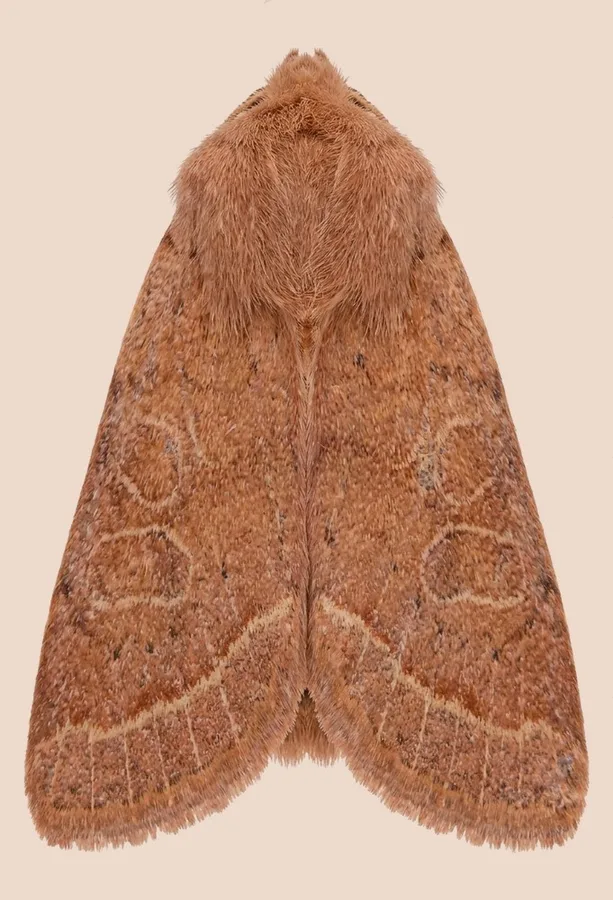
Common quaker
It is often one of the first moths at light traps in late winter, feeding on willow catkins before most other moths have emerged.
| Where | Deciduous woodland and scrub |
|---|---|
| Size | 34 to 40 mm wingspan |
| When | February to May |
The common quaker is a variable moth ranging from greyish brown to reddish brown, with large rounded stigmata outlined in a paler shade and a straight subterminal line near the wing edge. The hindwings are duller and greyish.
Caterpillars feed on oak, sallow, and other deciduous trees through spring, and the single yearly generation emerges from late winter into spring, when adults visit sallow blossom and blackthorn flowers at night.
Traits
Habitat
Woodland
Colour
Brown, Grey
Active
Night
To people
Attracted to light; harmless to people.
Activity through the year
Often confused with
The clouded drab is similarly variable but slightly larger at 35 to 40 mm, with a diagnostic wing shape and a paler fringe along the forewing edge in darker forms.
Questions
Is the Common quaker dangerous to people?
Attracted to light; harmless to people.
When can you see the Common quaker?
The Common quaker can be seen from February to May, at night.
Plate retouched from a photo by Ben Sale from Stevenage, UK, CC BY 2.0, Wikimedia Commons Licence
Report a mistake in this entry
Butterflies and moths›Owlet moths›Orthosia
Last updated 2026-09-26. Every entry is checked against published sources.