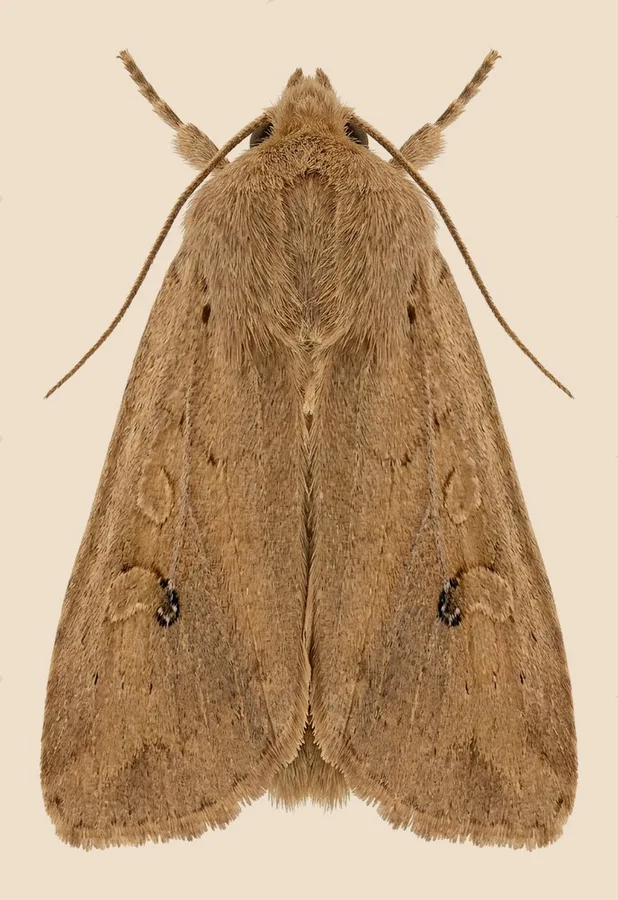
Small quaker
This early spring moth's eggs hatch within about a week, timed so caterpillars emerge just as oak and other broadleaved trees break bud for the season's youngest leaves.
| Where | Woodland, hedgerows and scrub edges |
|---|---|
| Size | 28 to 32 mm wingspan |
| When | March to May |
The Small quaker has light greyish brown to reddish brown forewings with a small, faint stigma and a row of pale dots near the outer edge, noticeably smaller and more plainly marked than the similar Common quaker.
Adults fly in a single generation from March to May, and eggs are laid early enough that caterpillars hatch as oak and other broadleaved trees break bud, giving them access to young, tender leaves.
Traits
Habitat
Woodland
Colour
Brown
Active
Night
To people
Attracted to light after dark; does not bite or sting people.
Activity through the year
Often confused with
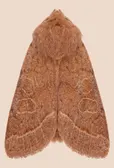
Larger, with a wingspan of 34 to 40 mm and a bigger, more rounded stigma outlined in a paler colour than the Small quaker's.
Questions
Is the Small quaker dangerous to people?
Attracted to light after dark; does not bite or sting people.
When can you see the Small quaker?
The Small quaker can be seen from March to May, at night.
Plate retouched from a photo by Donald Hobern from Copenhagen, Denmark, CC BY 2.0, Wikimedia Commons Licence
Report a mistake in this entry
Butterflies and moths›Owlet moths›Orthosia
Last updated 2026-09-26. Every entry is checked against published sources.