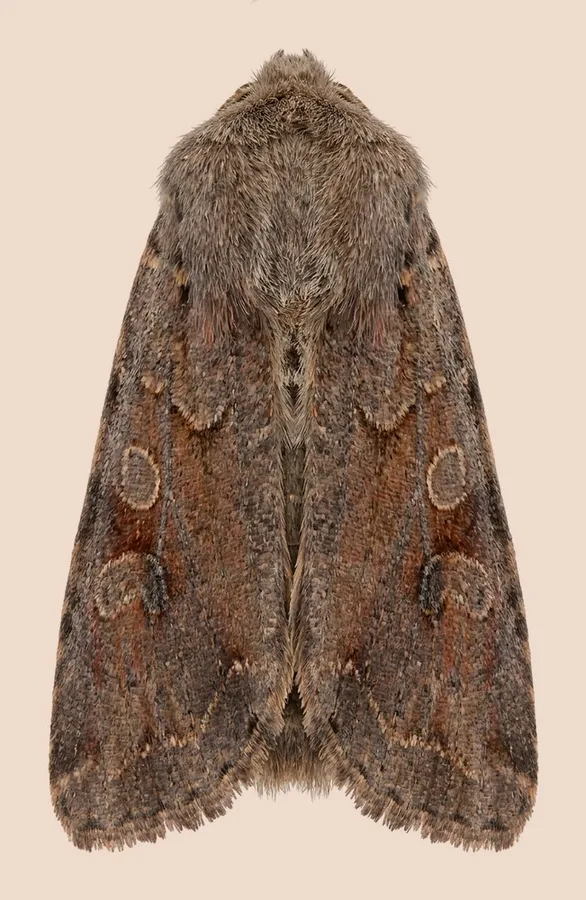
Clouded drab
Its forewing pattern ranges from plain blackish brown to bright buff or orange, so two Clouded drabs from the same brood can look like different species.
| Where | Oak woodland and gardens |
|---|---|
| Size | 32 to 42 mm wingspan |
| When | March to May |
The Clouded drab is one of the most variable spring moths, with forewings that range from blackish brown through grey to pale buff or orange. Despite this variation, three faint pale blotches usually sit just inside the outer cross line, giving steadier ground for identification than color alone.
Adults fly from March to May and visit sallow blossom and light traps at night. Caterpillars feed through early summer on oak and willow, along with birch, hawthorn, hazel, elm and lime, before pupating underground to spend the winter as a pupa.
Traits
Habitat
Woodland
Colour
Brown, Grey, Orange
Active
Night
To people
Comes readily to light and sallow blossom at night, with no known risk to people.
Activity through the year
Often confused with
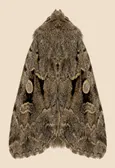
A similar 30 to 40 mm wingspan, but usually shows a bold, dark gothic-arch mark in the middle of the forewing that the Clouded drab lacks.
Questions
Is the Clouded drab dangerous to people?
Comes readily to light and sallow blossom at night, with no known risk to people.
When can you see the Clouded drab?
The Clouded drab can be seen from March to May, at night.
Plate retouched from a photo by gailhampshire, CC BY 2.0, Wikimedia Commons Licence
Report a mistake in this entry
Butterflies and moths›Owlet moths›Orthosia
Last updated 2026-09-26. Every entry is checked against published sources.