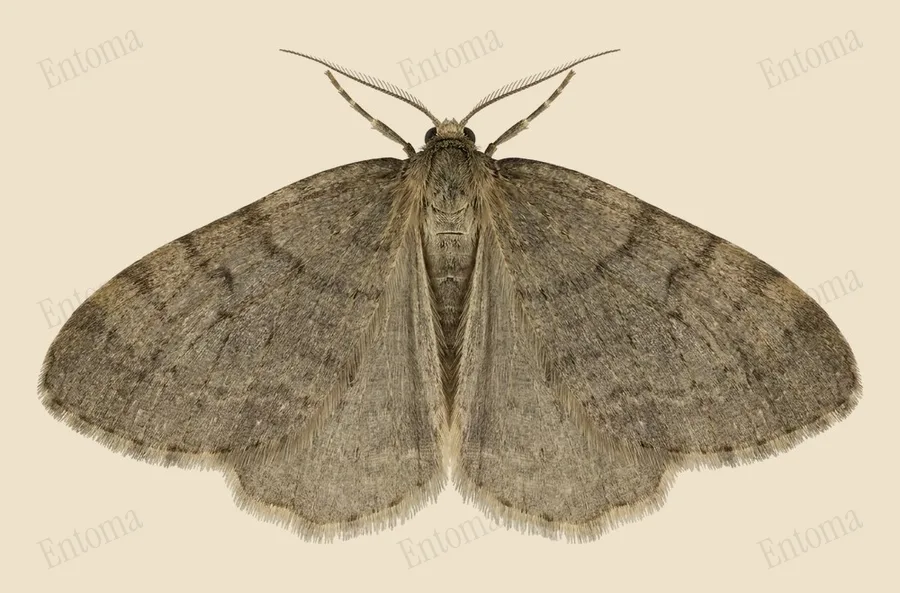
Winter moth
Its females have only short wing stubs and cannot fly at all, so they climb tree trunks on foot in midwinter to release a scent that draws in the flying males.
| Where | Deciduous woodland, hedgerows and gardens |
|---|---|
| Size | 20 to 28 mm wingspan (male; females wingless) |
| When | October to February |
Male Winter moths have grey brown forewings with faint wavy crosslines and a pale fringe, while females are almost wingless, with short grey brown stubs used only for climbing rather than flight.
Adults appear late in the year, when males fly on mild nights in search of flightless females resting on tree bark. Eggs laid in bark crevices overwinter, and the caterpillars that hatch in spring feed on the buds and young leaves of many deciduous trees.
Traits
Habitat
Woodland
Colour
Brown, Grey
Active
Night
To people
Attracted to light; harmless to people, though caterpillars can defoliate garden and orchard trees in heavy years.
Activity through the year
Often confused with
Also has a flightless female, with the male reaching about 27 to 32 mm wingspan, but flies later, from February to April, well after the Winter moth's November to January peak.
Questions
Is the Winter moth dangerous to people?
Attracted to light; harmless to people, though caterpillars can defoliate garden and orchard trees in heavy years.
When can you see the Winter moth?
The Winter moth can be seen from October to February, at night.
Plate retouched from a photo by Olei, CC BY‑SA 3.0, Wikimedia Commons Licence
The plate on this page is shared under the same licence as its source, CC BY-SA.
Report a mistake in this entry
Butterflies and moths›Geometer moths›Operophtera
Last updated 2026-09-26. Every entry is checked against published sources.