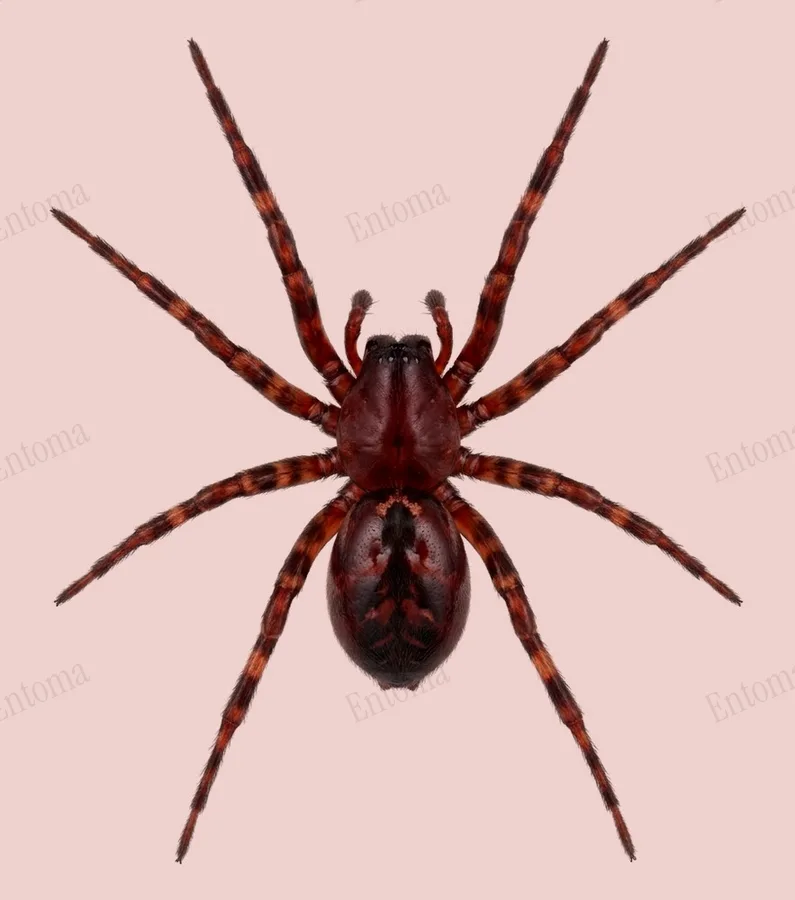
European cave spider
One of Europe's largest web spinning spiders spends its whole life avoiding light, retreating deeper into caves and wells the moment daylight starts to reach it.
| Where | Caves, cellars, tunnels and wells |
|---|---|
| Size | Female 12 to 17 mm, male 10 to 13 mm body length |
| When | January to December |
This is a large, long legged spider with a red brown body, dark leg rings and a yellowish abdomen marked with dark bands or blotches that turn solid black along the sides. A closely related species has much fainter markings and far less obvious leg rings.
Adults are strongly averse to light and stay hidden in caves, mines, cellars and wells, only venturing toward the entrance zone or outside after dusk to hunt, while young spiders disperse more widely before settling into similar dark retreats.
Traits
Habitat
Towns
Colour
Brown, Black, Yellow
Active
Night
To people
This large cave spider is not dangerous to people despite its size and rarely leaves the darkness of its cave or cellar to encounter anyone.
Activity through the year
Often confused with
Keeps only faint, subtle leg rings and fainter abdominal markings even as an adult, unlike the strong dark and orange leg rings and bolder abdominal pattern of the European cave spider.
Questions
Is the European cave spider dangerous to people?
This large cave spider is not dangerous to people despite its size and rarely leaves the darkness of its cave or cellar to encounter anyone.
When can you see the European cave spider?
The European cave spider can be seen from January to December, at night.
Plate retouched from a museum specimen photo by Staatliche Naturwissenschaftliche Sammlungen Bayerns, CC BY 4.0, GBIF Licence
Report a mistake in this entry
Spiders›Long-jawed orb weavers›Meta
Last updated 2026-09-27. Every entry is checked against published sources.