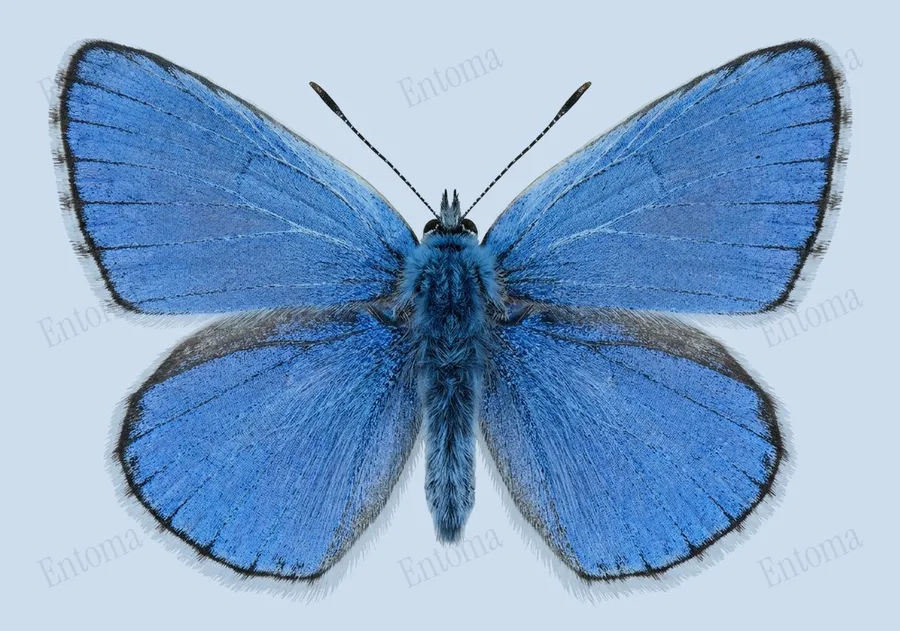
Adonis blue
Adonis blue caterpillars produce a sugary secretion that attracts ants, which guard them from predators and may even bury them in soil overnight for safekeeping.
| Where | Chalk grassland and dry scrub |
|---|---|
| Size | 30 to 40 mm wingspan |
| When | May to September |
Male Adonis blues have vivid sky blue upperwings crossed by fine black lines that run into a chequered white fringe, while females are mostly brown with a variable dusting of blue and orange spots near the wing edge. The wingspan measures 30 to 40 mm.
Caterpillars feed on horseshoe vetch and produce a sugary secretion that attracts tending ants, which guard them from predators in return. Adults fly by day over sheltered, flower rich chalk grassland in two broods across the warmer months.
Traits
Habitat
Grassland
Colour
Blue, Brown, Orange
Active
Day
To people
Feeds at flowers by day on chalk grassland; not known to bite or sting people.
Activity through the year
Often confused with
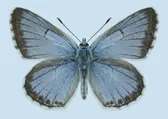
Usually smaller at 30 to 36 mm, the chalkhill blue is a paler, more silvery blue with brown rather than black lines crossing the white wing fringe.
Questions
Is the Adonis blue dangerous to people?
Feeds at flowers by day on chalk grassland; not known to bite or sting people.
When can you see the Adonis blue?
The Adonis blue can be seen from May to September, by day.
Plate retouched from a photo by Charles J. Sharp, CC BY‑SA 4.0, Wikimedia Commons Licence
The plate on this page is shared under the same licence as its source, CC BY-SA.
Report a mistake in this entry
Butterflies and moths›Blues and coppers›Lysandra
Last updated 2026-09-26. Every entry is checked against published sources.