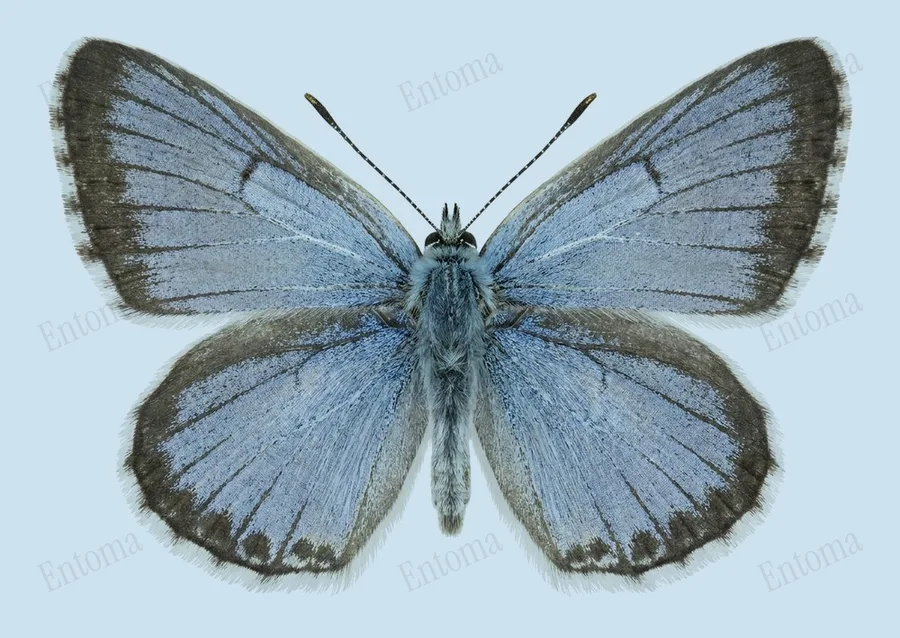
Chalkhill blue
Only male Chalkhill blues show pale, almost milky sky-blue wings; females are chocolate brown, so the two sexes are sometimes mistaken for separate species.
| Where | Chalk and limestone grassland |
|---|---|
| Size | 33 to 40 mm wingspan |
| When | July to September |
Male Chalkhill blues have pale, almost milky sky-blue upperwings with a thin dark border and a white fringe, while females are chocolate brown with a scatter of orange spots near the wing edge. Both sexes show a checkered fringe that helps separate them from other blue butterflies.
Adults fly in a single generation, emerging in mid-July and peaking in late July and August on chalk and limestone grassland. Caterpillars feed exclusively on horseshoe vetch, and ants often tend them for the sugary secretions they produce.
Traits
Habitat
Grassland
Colour
Blue, Brown, Orange
Active
Day
To people
Poses no risk to people; males often gather at damp ground to take up minerals.
Activity through the year
Often confused with
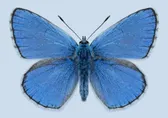
A similar 30 to 40 mm wingspan, but males are a more vivid turquoise blue with fine black lines crossing the white wing fringe, rather than the plain fringe of the Chalkhill blue.
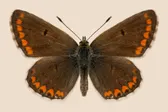
Noticeably smaller at 25 to 31 mm wingspan and lacking any blue scales, so it never shows the pale blue upperwings of male Chalkhill blues.
Questions
Is the Chalkhill blue dangerous to people?
Poses no risk to people; males often gather at damp ground to take up minerals.
When can you see the Chalkhill blue?
The Chalkhill blue can be seen from July to September, by day.
Plate retouched from a photo by Michael Knapp, CC BY 4.0, Wikimedia Commons Licence
Report a mistake in this entry
Butterflies and moths›Blues and coppers›Lysandra
Last updated 2026-09-26. Every entry is checked against published sources.