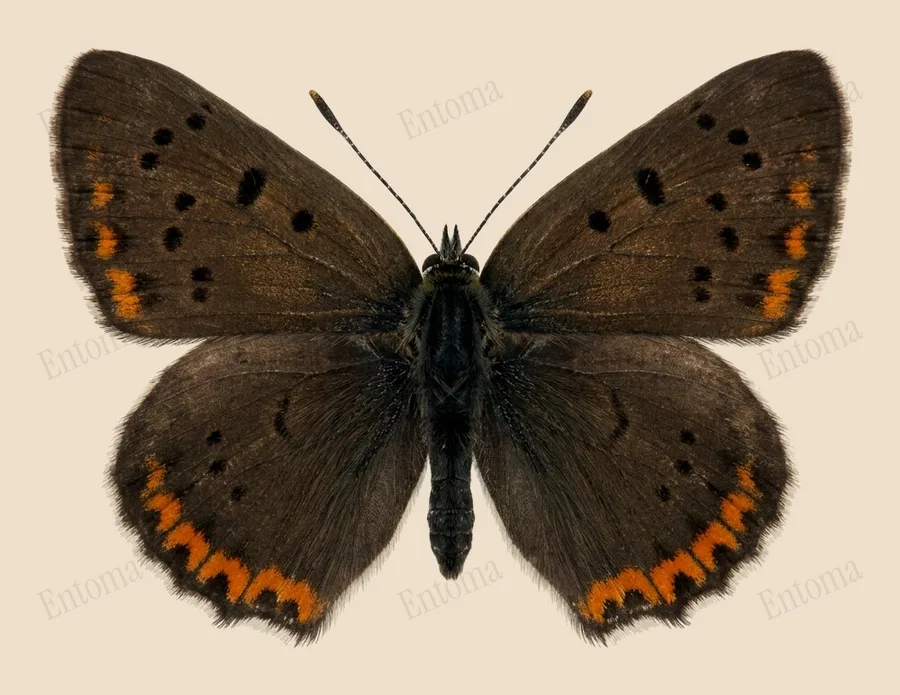
Sooty copper
Male sooty coppers are almost entirely dark sooty brown above, while females are bright orange, so the sexes can look like different species at a glance.
| Where | Dry grassland, scrub and meadows |
|---|---|
| Size | 28 to 32 mm wingspan |
| When | May to September |
The sooty copper shows striking differences between the sexes: males are dark sooty brown above with faint spotting, while females are coppery orange with black spots and a row of orange crescents along the hindwing edge. The wingspan typically measures 28 to 32 mm.
Caterpillars feed on common sorrel and sheep's sorrel, and the species can produce two or more generations across the flight season. Adults fly by day over dry grassland, scrub and meadows, settling often to feed at low growing flowers.
Traits
Habitat
Grassland
Colour
Brown, Orange, Black
Active
Day
To people
Feeds at low flowers by day; not known to bite or sting people.
Activity through the year
Often confused with
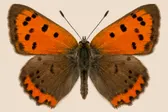
Overlapping in size at 22 to 32 mm, the small copper is bright coppery orange with black spots in both sexes, unlike the dark, sooty brown males of the sooty copper.
Questions
Is the Sooty copper dangerous to people?
Feeds at low flowers by day; not known to bite or sting people.
When can you see the Sooty copper?
The Sooty copper can be seen from May to September, by day.
Plate retouched from a photo by Олег Кудров, CC BY 4.0, Wikimedia Commons Licence
Report a mistake in this entry
Butterflies and moths›Blues and coppers›Lycaena
Last updated 2026-09-26. Every entry is checked against published sources.