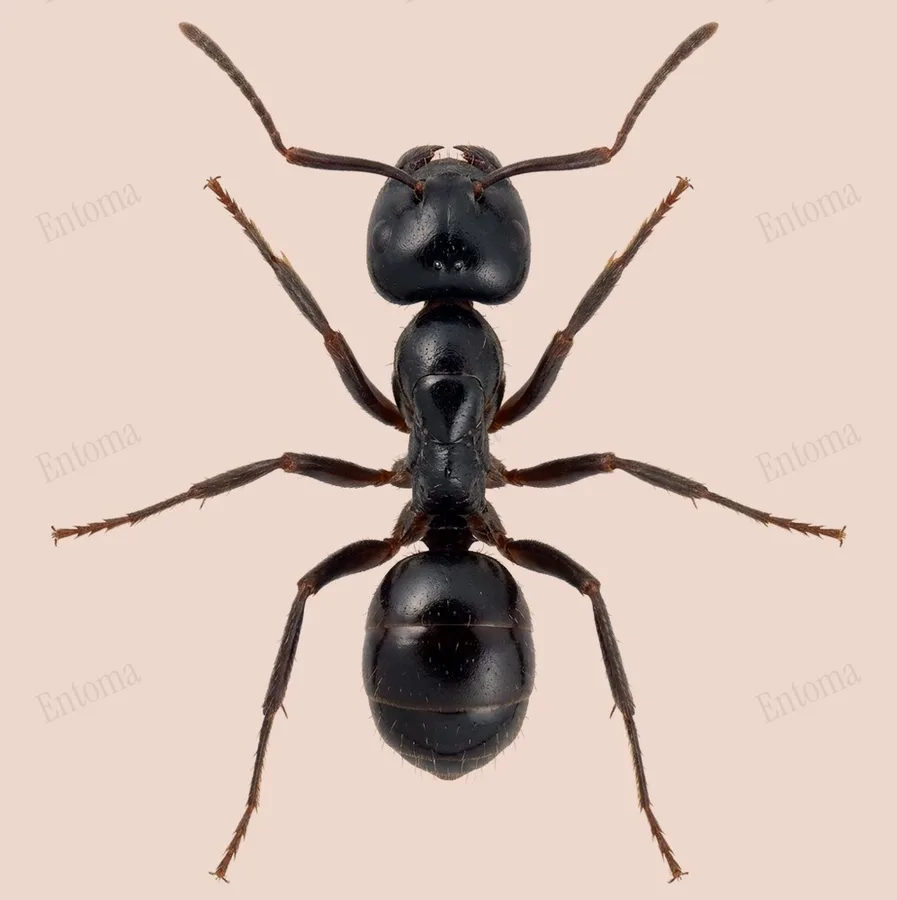
Jet ant
New queens found a colony by sneaking into another ant species' nest, killing its queen, and letting the host workers raise the invader's first jet black brood.
| Where | Old tree trunks, stumps and hedge banks |
|---|---|
| Size | 4 to 6 mm body length |
| When | March to October |
Workers are small, intensely glossy, jet black ants with a heart shaped head that looks disproportionately large for the body, giving the species its shine and its common name.
Colonies build carton nests from chewed wood bound with a sugary secretion and a fungus that hardens the material, usually inside hollow rotting trees, stumps or hedge banks, and new queens start colonies by taking over the nests of other ant species.
Traits
Habitat
Woodland
Colour
Black
Active
Day
To people
Harmless to people
Activity through the year
Often confused with
It has a dull, matte black body rather than the intensely glossy, shiny black of Lasius fuliginosus, and it does not build carton nests in tree trunks.
Questions
Is the Jet ant dangerous to people?
Harmless to people.
When can you see the Jet ant?
The Jet ant can be seen from March to October, by day.
Plate retouched from a photo by Michael Knapp, CC BY 4.0, Wikimedia Commons Licence
Report a mistake in this entry
Bees, wasps and ants›Ants›Lasius
Last updated 2026-09-26. Every entry is checked against published sources.