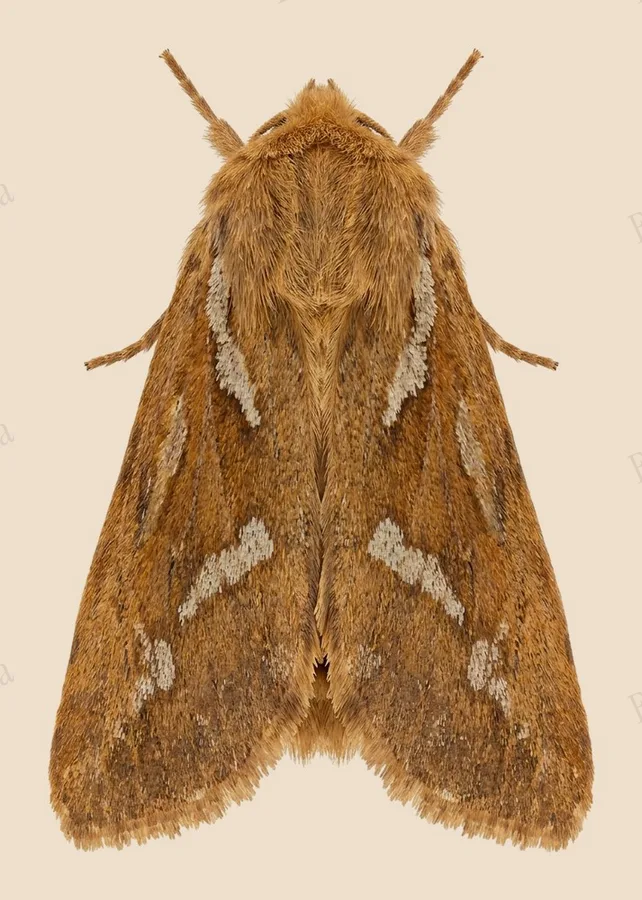
Common swift moth
Adult common swift moths have no working mouthparts and cannot feed at all, living for barely a week on energy stored from their larval stage.
| Where | Grassland, gardens and roadside verges |
|---|---|
| Size | 25 to 40 mm wingspan |
| When | May to July |
The Common swift moth is variable in colour, ranging from gingery brown to pale grey, with bold or faint white streaks on the forewing forming a rough V shape near the tip. Males are smaller and darker than the larger, paler females.
It flies from May to July over grassland, gardens and roadside verges, and adults do not feed since they lack functional mouthparts. Caterpillars live underground, feeding on the roots of grasses and other low plants.
Traits
Habitat
Grassland
Colour
Brown, Grey
Active
Night
To people
Attracted to light; harmless to people.
Activity through the year
Often confused with
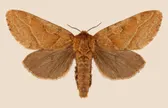
Overlapping in size at about 26 to 48 mm wingspan, but the Orange Swift has richer orange brown forewings with a bold white V mark, while the Common swift moth is duller and more variably marked.
Questions
Is the Common swift moth dangerous to people?
Attracted to light; harmless to people.
When can you see the Common swift moth?
The Common swift moth can be seen from May to July, at night.
Plate retouched from a photo by Donald Hobern from Copenhagen, Denmark, CC BY 2.0, Wikimedia Commons Licence
Report a mistake in this entry
Butterflies and moths›Ghost moths›Korscheltellus
Last updated 2026-09-26. Every entry is checked against published sources.