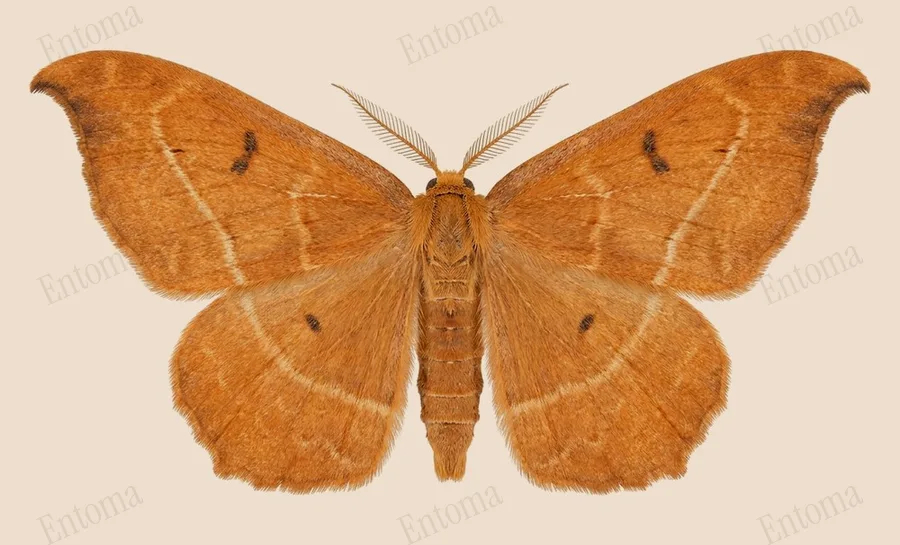
Oak hook-tip
This moth's caterpillar spins its cocoon inside a tightly folded oak leaf, staying hidden there as a pupa through winter until spring.
| Where | Oak woodland, hedgerows, parks and gardens |
|---|---|
| Size | 18 to 30 mm wingspan |
| When | May to September |
The oak hook-tip is a mottled grey-brown moth with a hooked wingtip typical of the hook-tip family, lacking the dark cross-band that marks the similar barred hook-tip. Females are larger than males.
Two generations fly most years, one in early summer and a second from late summer into autumn. Caterpillars feed on oak leaves and spin a cocoon inside a tightly folded leaf, where they overwinter as a pupa.
Traits
Habitat
Woodland
Colour
Brown, Grey
Active
Night
To people
A plain woodland moth rarely encountered by people; harmless to handle.
Activity through the year
Often confused with
Slightly smaller on average at about 20 to 28 mm wingspan, with a broad dark band across the forewing that the oak hook-tip lacks, and its caterpillars feed on beech rather than oak.
Questions
Is the Oak hook-tip dangerous to people?
A plain woodland moth rarely encountered by people; harmless to handle.
When can you see the Oak hook-tip?
The Oak hook-tip can be seen from May to September, at night.
Plate retouched from a photo by Ben Sale from Stevenage, UK, CC BY 2.0, Wikimedia Commons Licence
Report a mistake in this entry
Butterflies and moths›Hook-tip moths›Watsonalla
Last updated 2026-09-26. Every entry is checked against published sources.