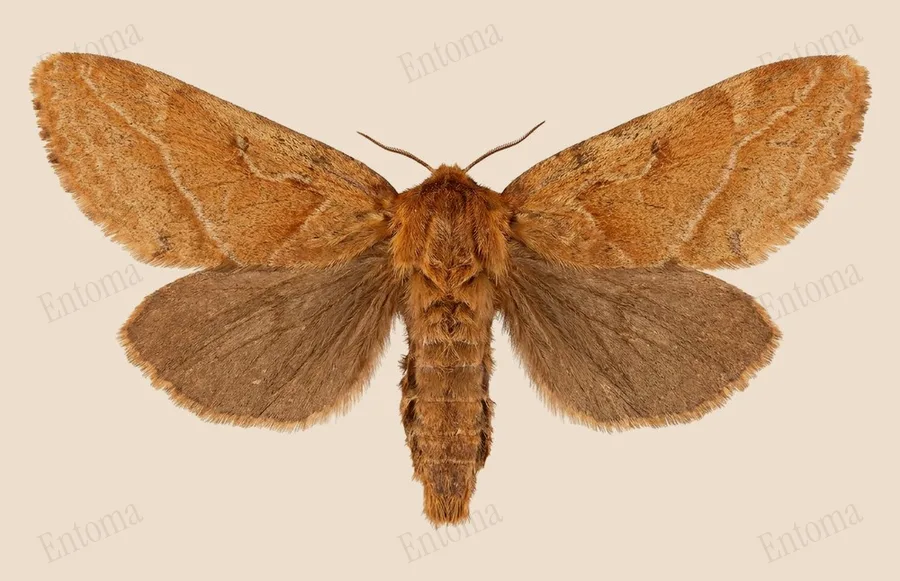
Orange swift
The adult has no proboscis at all and cannot feed, living entirely off reserves built up as an underground caterpillar that can spend up to two years chewing plant roots.
| Where | Rough grassland, waste ground, moorland |
|---|---|
| Size | 32 to 48 mm wingspan |
| When | July to September |
Males have rich orange forewings crossed by a pale, open V-shaped mark and dark brown hindwings, while females are larger and duller, with less orange colouring.
Caterpillars live underground for up to two years, feeding on the roots of docks, dandelions, bracken and other plants before the moths emerge to fly at dusk in late summer.
Traits
Habitat
Grassland
Colour
Orange, Brown
Active
Night
To people
Harmless
Activity through the year
Often confused with
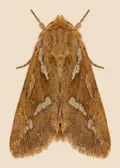
The Common Swift has dark brown, not orange, forewings and flies earlier in the year, so an orange swift-moth seen after midsummer is almost always this species instead.
Questions
Is the Orange swift dangerous to people?
The Orange swift is harmless to people.
When can you see the Orange swift?
The Orange swift can be seen from July to September, at night.
Plate retouched from a photo by Didier Descouens, CC BY‑SA 4.0, Wikimedia Commons Licence
The plate on this page is shared under the same licence as its source, CC BY-SA.
Report a mistake in this entry
Butterflies and moths›Ghost moths›Triodia
Last updated 2026-09-26. Every entry is checked against published sources.