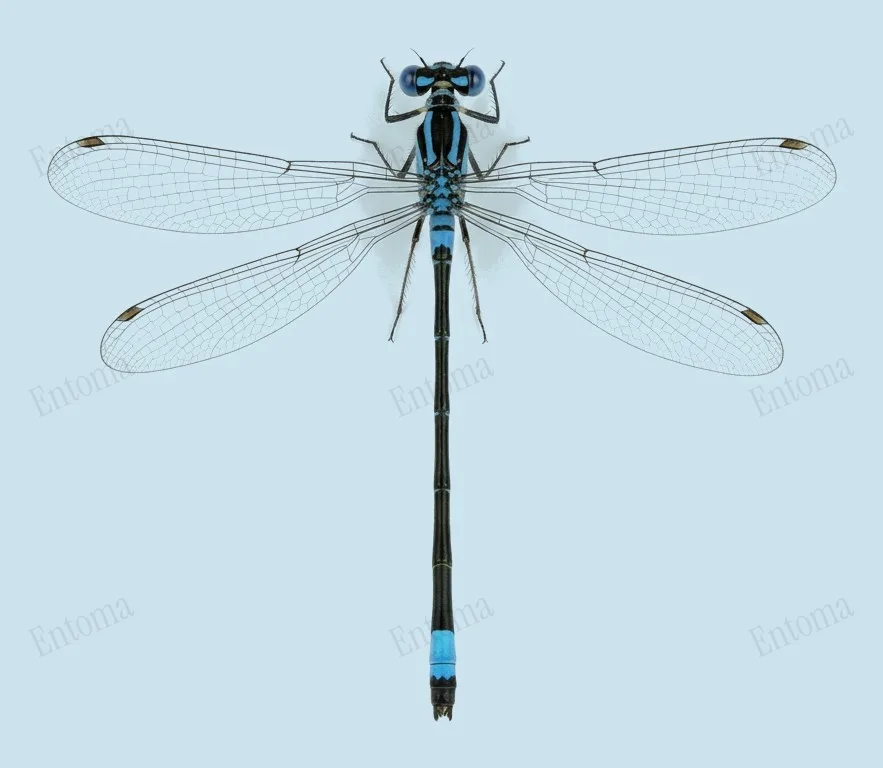
Blue-tailed damselfly
Females come in at least five colour forms, and one of them looks just like a male.
| Where | Ponds, lakes, slow rivers, even slightly polluted water |
|---|---|
| Size | 27 to 35 mm long |
| When | April to September |
It tolerates poorer water than most damselflies, and in polluted or brackish water it may be the only species present.
Mating pairs can stay joined in a wheel for many hours.
The male has a dark abdomen with a bright blue tip. Young adults look different: the abdomen is pink, violet or green, depending on the colour form, and the colour changes as the damselfly matures. Many mature females end up blue like the male.
Traits
Habitat
Water
Colour
Blue, Black
Active
Day
To people
Harmless; cannot sting
Activity through the year
Often confused with
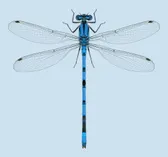
Blue along much of the abdomen, not only near the tip.
Questions
Is the Blue-tailed damselfly dangerous to people?
Harmless; cannot sting.
When can you see the Blue-tailed damselfly?
The Blue-tailed damselfly can be seen from April to September, by day.
Sources en.wikipedia.orgbritish-dragonflies.org.uknaturespot.org.uk
Plate retouched from a museum specimen photo by Natural History Museum, CC0, GBIF Licence
Report a mistake in this entry
Dragonflies and damselflies›Narrow-winged damselflies›Ischnura
Last updated 2026-10-17. Every entry is checked against published sources.