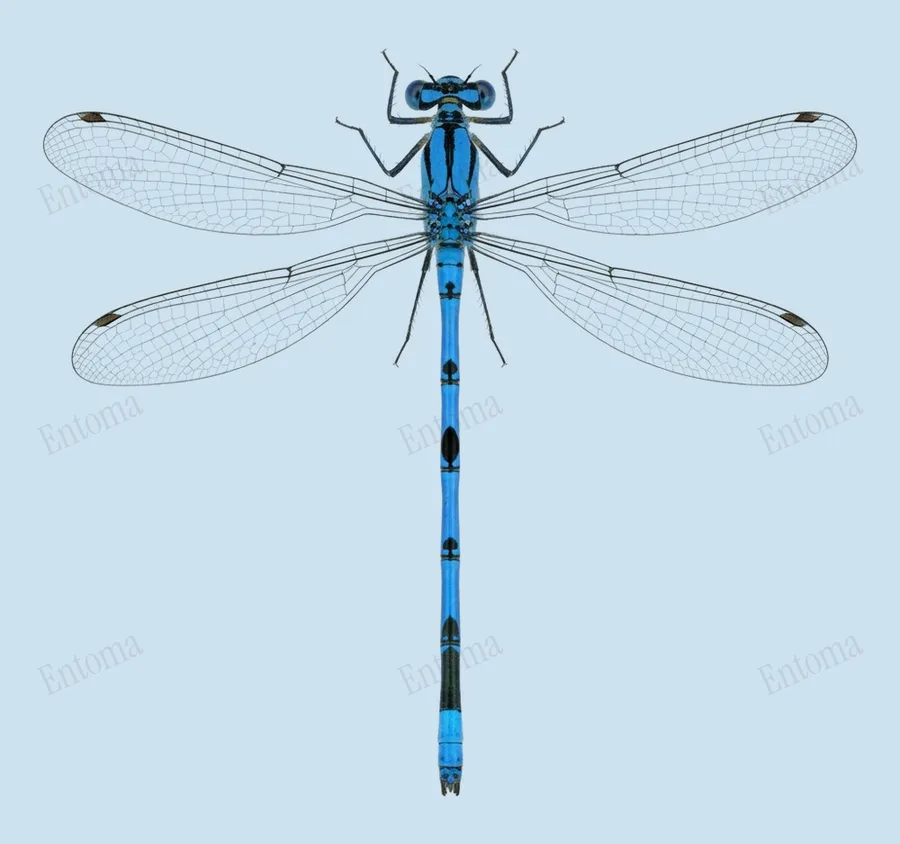
Common blue damselfly
During mating the male grips the female by the neck while she curls her body forward to his reproductive organs, forming a mating wheel.
| Where | Ponds, lakes and slow canals |
|---|---|
| Size | 29 to 36 mm body length |
| When | May to September |
Male Common blue damselflies are pale blue with black bands along the abdomen, identified by a black mark shaped like a button mushroom on the second segment. Females are blue or dull green with black torpedo-shaped markings instead.
It breeds in almost any standing water, from ponds to lakes and canals. During mating the male clasps the female by the neck while she bends forward to his reproductive organs, forming a wheel shape.
Traits
Habitat
Wetland
Colour
Blue, Black
Active
Day
To people
Found around almost any waterbody; it does not bite or sting people.
Activity through the year
Often confused with
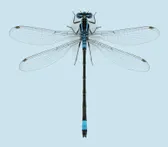
Similar length at about 27 to 35 mm body length, but only one abdominal segment near the tip is blue against an otherwise black abdomen, rather than the mostly blue body of the Common blue damselfly.
Questions
Is the Common blue damselfly dangerous to people?
Found around almost any waterbody; it does not bite or sting people.
When can you see the Common blue damselfly?
The Common blue damselfly can be seen from May to September, by day.
Plate retouched from a museum specimen photo by Natural History Museum, CC0, GBIF Licence
Report a mistake in this entry
Dragonflies and damselflies›Narrow-winged damselflies›Enallagma
Last updated 2026-09-26. Every entry is checked against published sources.