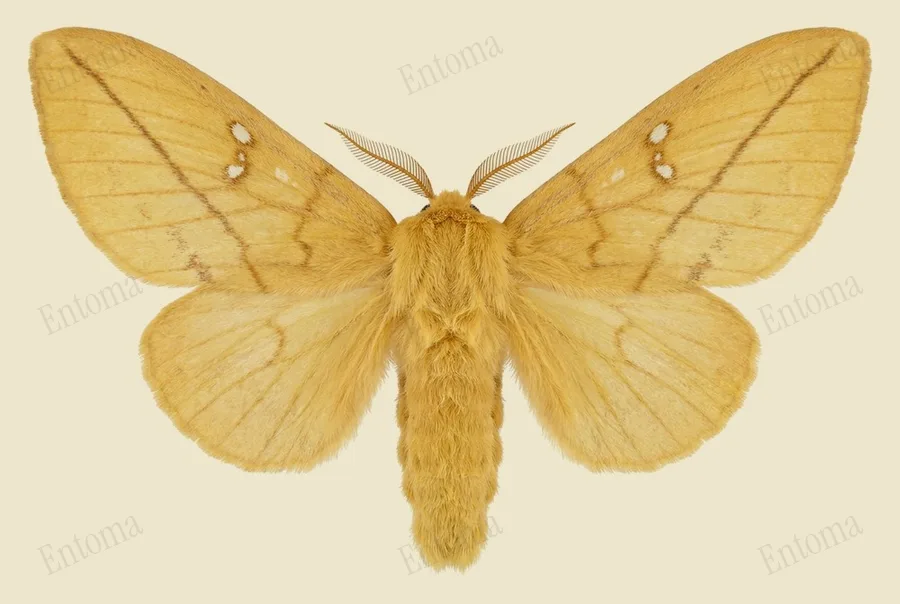
Drinker moth
Both its English and Latin names come from the old belief that its caterpillar likes to drink dew drops off blades of grass.
| Where | Grassland, reedbeds, and rough verges |
|---|---|
| Size | 45 to 65 mm wingspan |
| When | June to August |
It is a large, stout, furry moth with a wingspan of 45 to 65 mm; males are warm orange-brown while females are paler yellowish and slightly bigger, and both sexes usually carry two small white spots and a diagonal crossline on each forewing.
Caterpillars are hairy with gold speckling and feed on coarse grasses and reeds such as cock's-foot, overwintering as small larvae tucked low in vegetation before waking in spring to resume feeding and growing.
Traits
Habitat
Grassland
Colour
Orange, Brown, Yellow
Active
Night
To people
Mild
Harmless as an adult; the caterpillar's hairs can irritate skin if handled.
Activity through the year
Often confused with
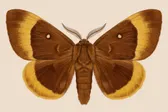
The oak eggar has a single white spot rather than the drinker's two, and shows a broad pale band across chestnut-brown wings instead of the drinker's diagonal crossline.
Questions
Is the Drinker moth dangerous to people?
Mild. Harmless as an adult; the caterpillar's hairs can irritate skin if handled.
When can you see the Drinker moth?
The Drinker moth can be seen from June to August, at night.
Plate retouched from a photo by Dumi, CC BY‑SA 3.0, Wikimedia Commons Licence
The plate on this page is shared under the same licence as its source, CC BY-SA.
Report a mistake in this entry
Butterflies and moths›Lappet moths›Euthrix
Last updated 2026-09-26. Every entry is checked against published sources.