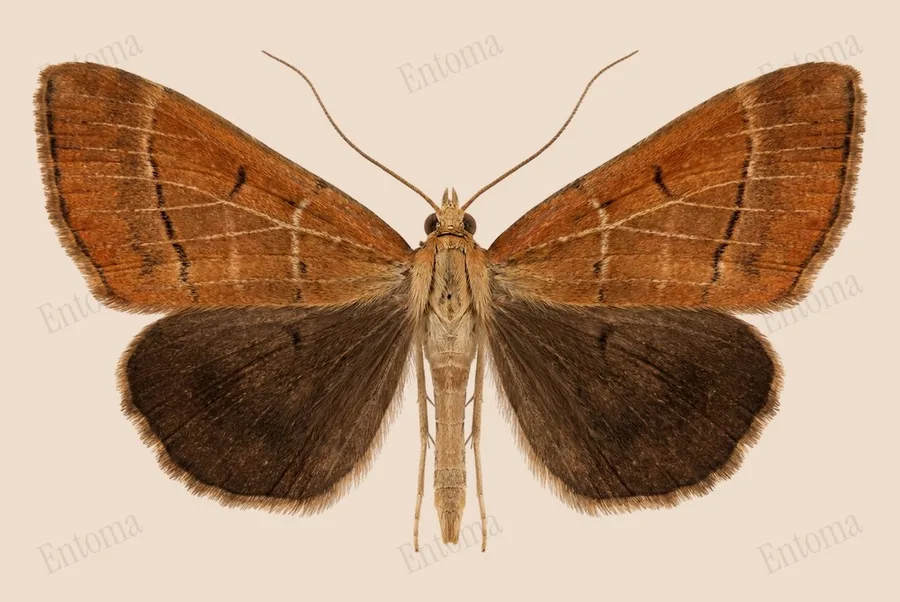
Long-legged tabby
This small moth stands on unusually long legs that tilt its body and wings upward at a steep angle when it comes to rest on sand or shingle.
| Where | Shingle beaches, sand dunes and chalk grassland |
|---|---|
| Size | 22 to 27 mm wingspan |
| When | June to August |
The Long-legged Tabby is a sandy brown moth with conspicuous white dots along the leading edge of the forewing and a pale wavy line crossing the outer half of the wing. Its unusually long legs tilt the body upward at rest, giving it a distinctive stance among small moths.
Caterpillars feed on mosses growing on the ground, and adults fly from June to August, mostly along shingle beaches, sand dunes and chalky ground across much of Europe. It comes readily to light after dark.
Traits
Habitat
Coast
Colour
Brown, White
Active
Night
To people
Comes to light after dark; harmless to people.
Activity through the year
Often confused with
Similar size at about 20 to 25 mm wingspan, distinguished by a white discal spot and a more irregular, less conspicuous second cross line than the Long-legged Tabby.
Questions
Is the Long-legged tabby dangerous to people?
Comes to light after dark; harmless to people.
When can you see the Long-legged tabby?
The Long-legged tabby can be seen from June to August, at night.
Plate retouched from a photo by NobbiP, CC BY‑SA 3.0, Wikimedia Commons Licence
The plate on this page is shared under the same licence as its source, CC BY-SA.
Report a mistake in this entry
Butterflies and moths›Pyralid moths›Synaphe
Last updated 2026-09-26. Every entry is checked against published sources.