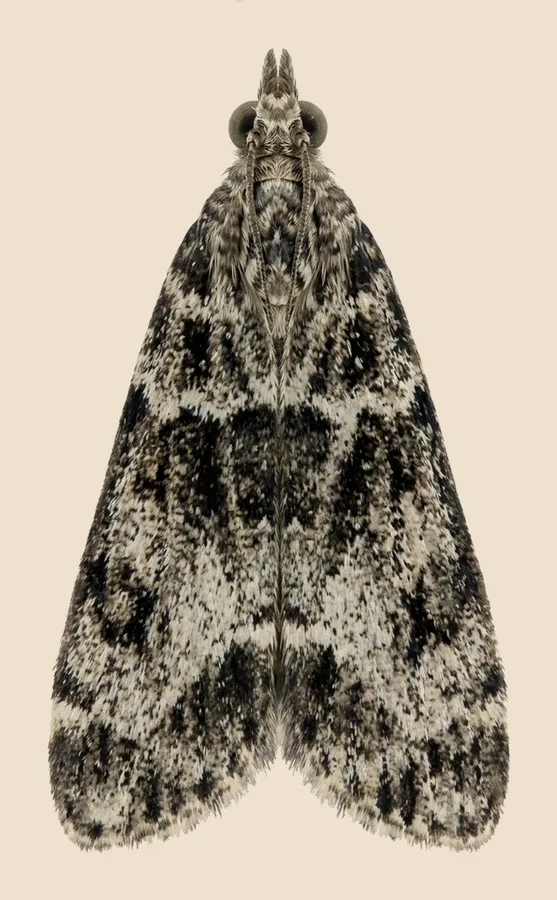
Small grey
Its cross-lines form an X-shaped pattern that fills the entire outer third of the forewing, a layout shared by almost no related species.
| Where | Gardens, woodland, and walls |
|---|---|
| Size | 16 to 19 mm wingspan |
| When | June to August |
It is a small, dark moth with fine pale cross-lines on the forewing, the outer pair meeting to form a rough X shape near the wing tip.
Caterpillars feed on mosses growing on tree trunks, walls, and rocks rather than on green plants, and adults are readily disturbed from these same daytime resting spots.
Traits
Habitat
Garden
Colour
Grey, Black
Active
Night
To people
Harmless
Activity through the year
Often confused with
Garden grey is narrower winged and on average slightly larger than the small grey, and the two are often told apart only by close examination of the underlying structures.
Questions
Is the Small grey dangerous to people?
The Small grey is harmless to people.
When can you see the Small grey?
The Small grey can be seen from June to August, at night.
Plate retouched from a photo by gailhampshire from Cradley, Malvern, U.K, CC BY 2.0, Wikimedia Commons Licence
Report a mistake in this entry
Butterflies and moths›Grass moths›Eudonia
Last updated 2026-09-26. Every entry is checked against published sources.