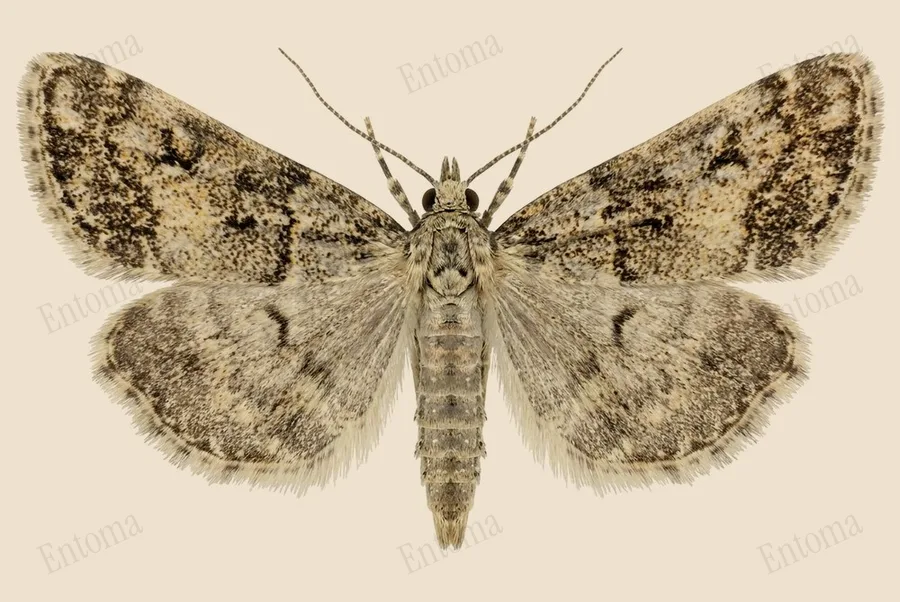
Little grey
At rest on a wall or tree trunk this tiny moth looks like a fleck of lichen, its wings patterned in bands of grey and cream that mosses growing nearby also share.
| Where | Gardens, woods and damp walls |
|---|---|
| Size | 15 to 20 mm wingspan |
| When | June to August |
The Little grey has whitish forewings divided by two greenish grey lines into three sections, with a paler central area flecked with greyish green scales, and whitish hindwings crossed by faint brownish veins.
Caterpillars feed on mosses growing on walls, tree trunks and other damp surfaces, and the adults rest by day in similarly sheltered spots before flying at night, when they are readily drawn to light traps.
Traits
Habitat
Garden
Colour
Grey, White
Active
Night
To people
Attracted to light; harmless to people.
Activity through the year
Often confused with
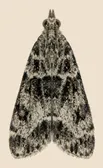
Slightly smaller at about 16 to 19 mm wingspan, with a more contrasted, sharply chequered fringe pattern than the softer banding of the Little grey.
Questions
Is the Little grey dangerous to people?
Attracted to light; harmless to people.
When can you see the Little grey?
The Little grey can be seen from June to August, at night.
Plate retouched from a photo by Janet Graham, CC BY 2.0, Wikimedia Commons Licence
Report a mistake in this entry
Butterflies and moths›Grass moths›Eudonia
Last updated 2026-09-26. Every entry is checked against published sources.