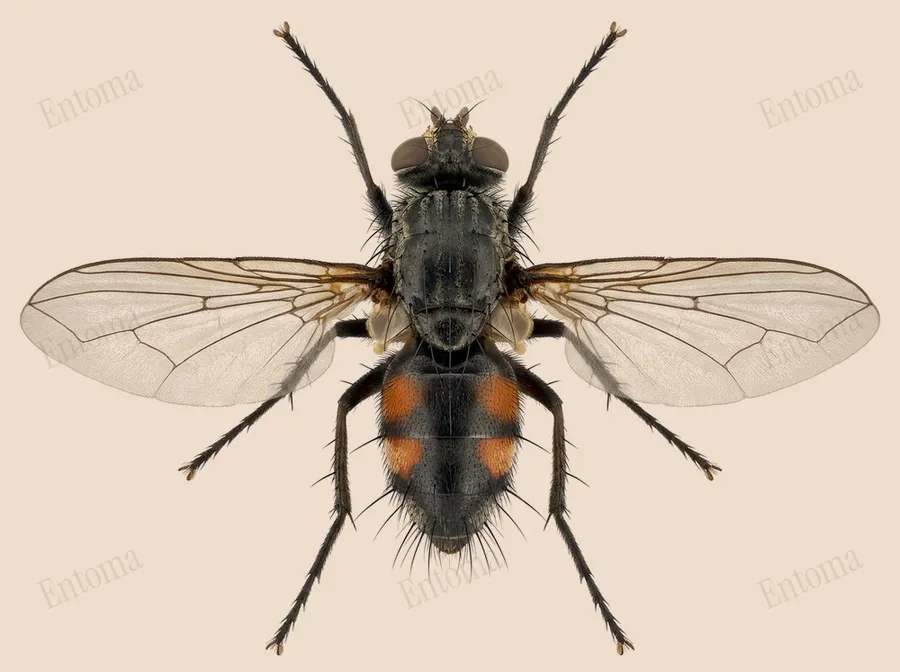
Red spotted parasite fly
Despite parasitizing moth caterpillars as larvae, the adults are common flower visitors, often seen feeding on umbellifers through the summer.
| Where | Hedgerows, grassland and rough ground |
|---|---|
| Size | 5 to 10 mm body length |
| When | June to October |
It is a bristly black fly with a silvery grey face, a grey thorax marked by four narrow black stripes, and bright orange patches on the sides of the abdomen that make it easy to pick out among other tachinids.
Adults visit flowers on grassland, hedgerows and rough ground in summer, while the larvae develop as internal parasites inside the caterpillars of moths.
Traits
Habitat
Grassland
Colour
Black, Orange, Grey
Active
Day
To people
Harmless
Activity through the year
Often confused with
Its abdominal side patches are a faint orange rather than the vivid red patches of Eriothrix rufomaculata, and its wing veins carry small hairs that Eriothrix lacks.
Questions
Is the Red spotted parasite fly dangerous to people?
The Red spotted parasite fly is harmless to people.
When can you see the Red spotted parasite fly?
The Red spotted parasite fly can be seen from June to October, by day.
Plate retouched from a photo by gailhampshire from Cradley, Malvern, U.K, CC BY 2.0, Wikimedia Commons Licence
Report a mistake in this entry
Flies›Tachinid flies›Eriothrix
Last updated 2026-09-26. Every entry is checked against published sources.