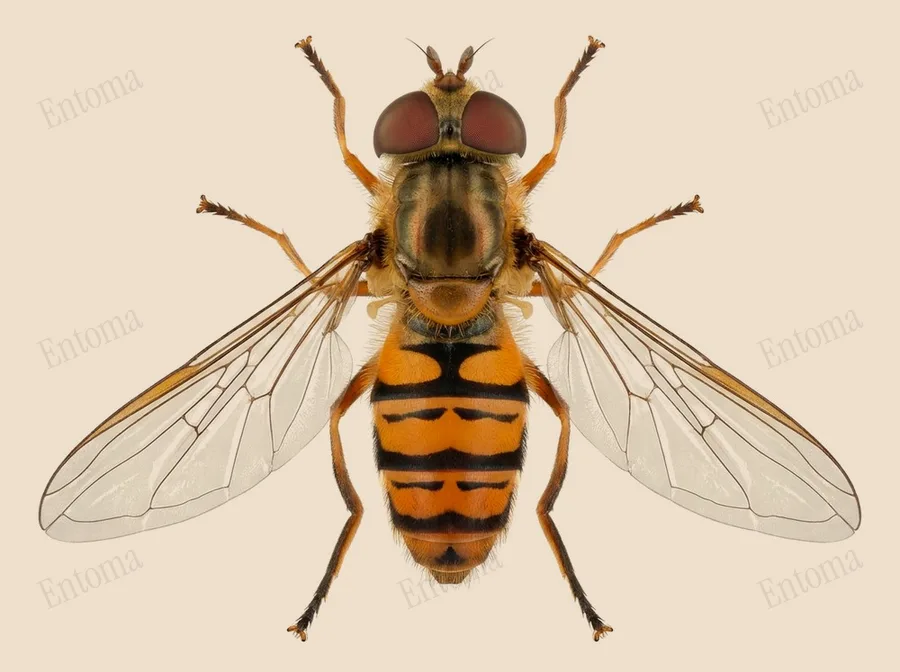
Marmalade hover fly
Huge numbers migrate across the English Channel each year, sometimes forming visible clouds that drift along the coast.
| Where | Gardens, parks, sunny woodland edges |
|---|---|
| Size | 9 to 12 mm body length |
| When | March to November |
The abdomen carries alternating broad and narrow black bands on an orange background, with faint grey stripes on the thorax.
It breeds continuously through the warmer months and its larvae feed on aphids, making it a useful pest predator in gardens.
Traits
Habitat
Garden
Colour
Orange, Black
Active
Day
To people
Harmless
Activity through the year
Often confused with
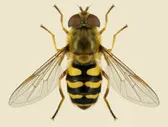
Syrphus ribesii has plain, even black abdominal bands, lacking the marmalade hoverfly's alternating broad and narrow bands.
Questions
Is the Marmalade hover fly dangerous to people?
The Marmalade hover fly is harmless to people.
When can you see the Marmalade hover fly?
The Marmalade hover fly can be seen from March to November, by day.
Plate retouched from a photo by fowels, CC BY‑SA 4.0, Wikimedia Commons Licence
The plate on this page is shared under the same licence as its source, CC BY-SA.
Report a mistake in this entry
Last updated 2026-09-26. Every entry is checked against published sources.