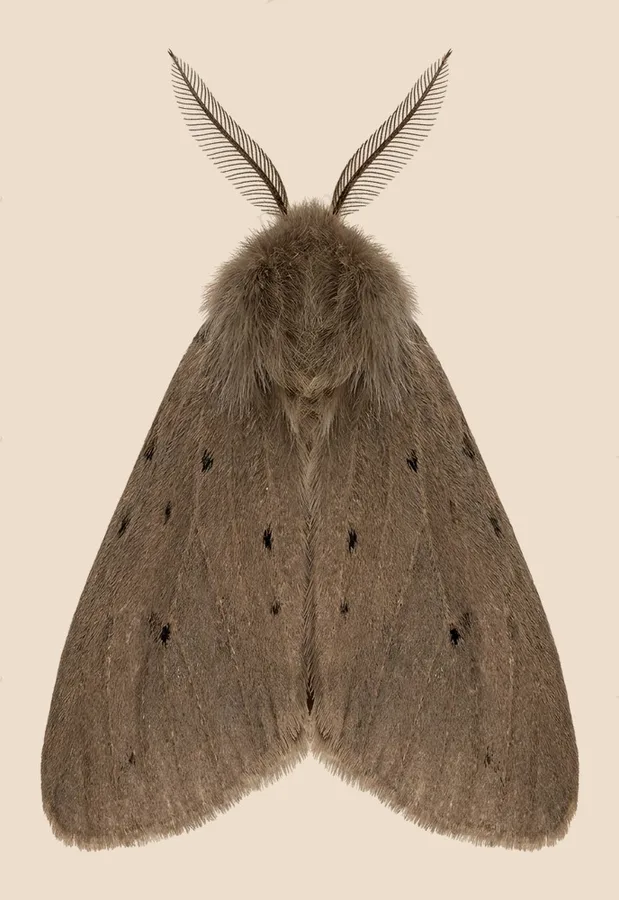
Muslin moth
Male and female muslin moths look so different that the sooty grey-brown male and the almost pure white female are easy to mistake for two separate species.
| Where | Gardens, waste ground and grassy places |
|---|---|
| Size | 28 to 38 mm wingspan |
| When | April to June |
The muslin moth shows strong sexual dimorphism: males are sooty grey-brown while females are almost pure white, both finely speckled with black spots. The hairy caterpillar is grey-brown, stout, with tufts of ginger-brown hair sprouting from small warts along its body.
One generation flies in spring, and caterpillars feed afterward on a wide range of low-growing plants such as dandelion, dock and chickweed. They are often found in gardens and rough grassy places where these foodplants grow.
Traits
Habitat
Garden
Colour
White, Brown
Active
Night
To people
Attracted to light after dark; the hairy caterpillar is not documented to irritate skin.
Activity through the year
Often confused with
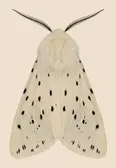
Larger at about 34 to 48 mm wingspan, with heavier black speckling on the forewings and a yellow-topped abdomen, unlike the female muslin moth's sparser spots.
Questions
Is the Muslin moth dangerous to people?
Attracted to light after dark; the hairy caterpillar is not documented to irritate skin.
When can you see the Muslin moth?
The Muslin moth can be seen from April to June, at night.
Plate retouched from a photo by Patrick Clement from West Midlands, England, CC BY 2.0, Wikimedia Commons Licence
Report a mistake in this entry
Butterflies and moths›Erebid moths›Diaphora
Last updated 2026-09-26. Every entry is checked against published sources.