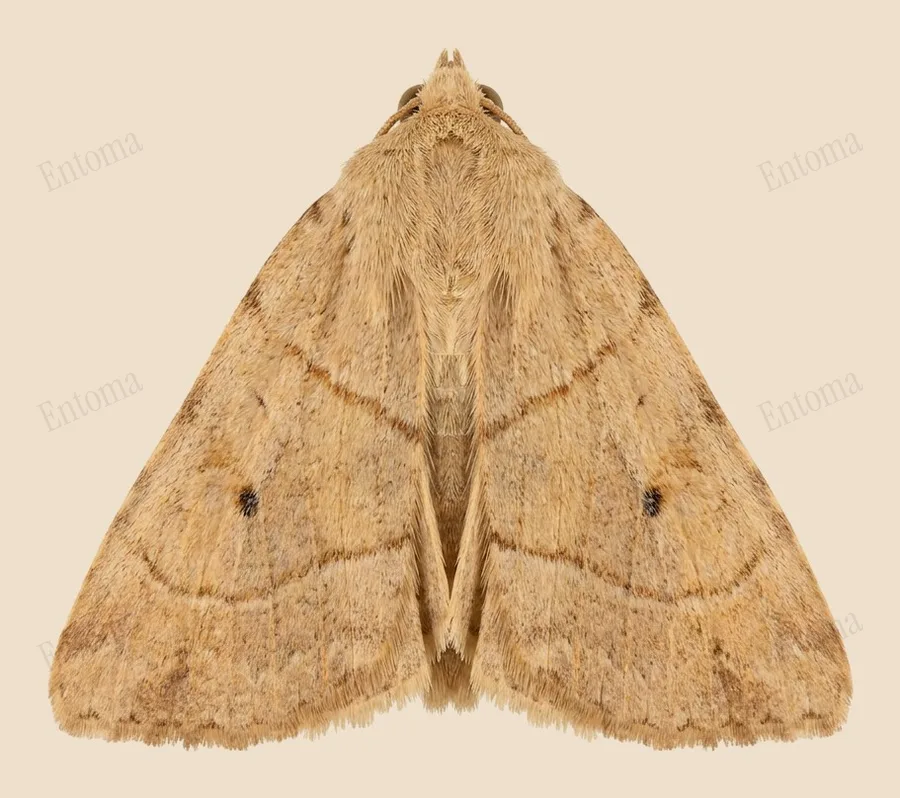
Dun-bar
Its caterpillar is a cannibal that attacks and eats other moth caterpillars, including ones larger than itself, despite feeding readily on tree leaves.
| Where | Deciduous woodland, hedgerows and gardens |
|---|---|
| Size | 25 to 33 mm wingspan |
| When | June to September |
The Dun-bar is a variable moth ranging from pale ochreous yellow to dark brown, crossed by a darker, contrasting band on the forewing, with two small dark dots often visible within the paler ground color.
Caterpillars feed on a wide range of broad-leaved trees such as oak, elm and hawthorn, but will readily turn predatory and consume other caterpillars sharing the same leaf, including those of winter moth.
Traits
Habitat
Woodland
Colour
Brown, Yellow
Active
Night
To people
Attracted to light; harmless to people.
Activity through the year
Often confused with
Similar mottled brown coloring but slightly larger at 29 to 34 mm wingspan, with a more arched leading edge and paler, unmarked hindwings compared to the Dun-bar.
Questions
Is the Dun-bar dangerous to people?
Attracted to light; harmless to people.
When can you see the Dun-bar?
The Dun-bar can be seen from June to September, at night.
Plate retouched from a photo by Stephen James McWilliam, CC0, Wikimedia Commons Licence
Report a mistake in this entry
Butterflies and moths›Owlet moths›Cosmia
Last updated 2026-09-26. Every entry is checked against published sources.