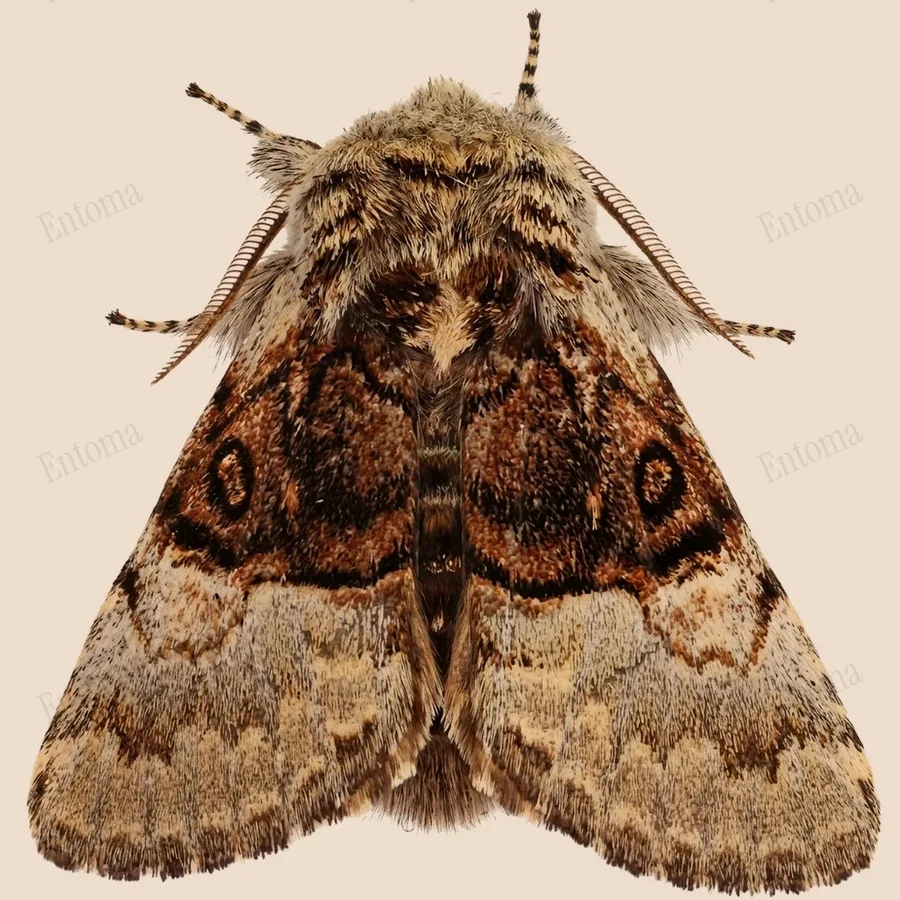
Nut-tree tussock
The Nut-tree tussock's wing edge is scalloped rather than smooth, giving this hazel-woodland moth an oddly dry, curled-leaf outline when it rests on bark.
| Where | Broadleaved woodland and gardens |
|---|---|
| Size | 27 to 39 mm wingspan |
| When | April to September |
The Nut-tree tussock has silvery grey to brown forewings with a slightly scalloped outer edge, a shape that helps it blend against curled or damaged leaves. Individual moths vary noticeably in how dark or pale the basal half of the wing appears.
In the warmer parts of its range two generations fly, in April to June and again from July to September, while a single generation flies further north. Caterpillars feed on hazel and birch, along with beech, oak and other deciduous trees, before overwintering as a pupa.
Traits
Habitat
Woodland
Colour
Brown, Grey
Active
Night
To people
Attracted to light at night; poses no known risk to people.
Activity through the year
Often confused with
A close 39 to 44 mm wingspan and a similarly mottled brown pattern, but with a whitish-grey forewing, two black basal dots and a jagged dark band that the Nut-tree tussock lacks.
Questions
Is the Nut-tree tussock dangerous to people?
Attracted to light at night; poses no known risk to people.
When can you see the Nut-tree tussock?
The Nut-tree tussock can be seen from April to September, at night.
Plate retouched from a photo by Janet Graham, CC BY 2.0, Wikimedia Commons Licence
Report a mistake in this entry
Butterflies and moths›Owlet moths›Colocasia
Last updated 2026-09-26. Every entry is checked against published sources.