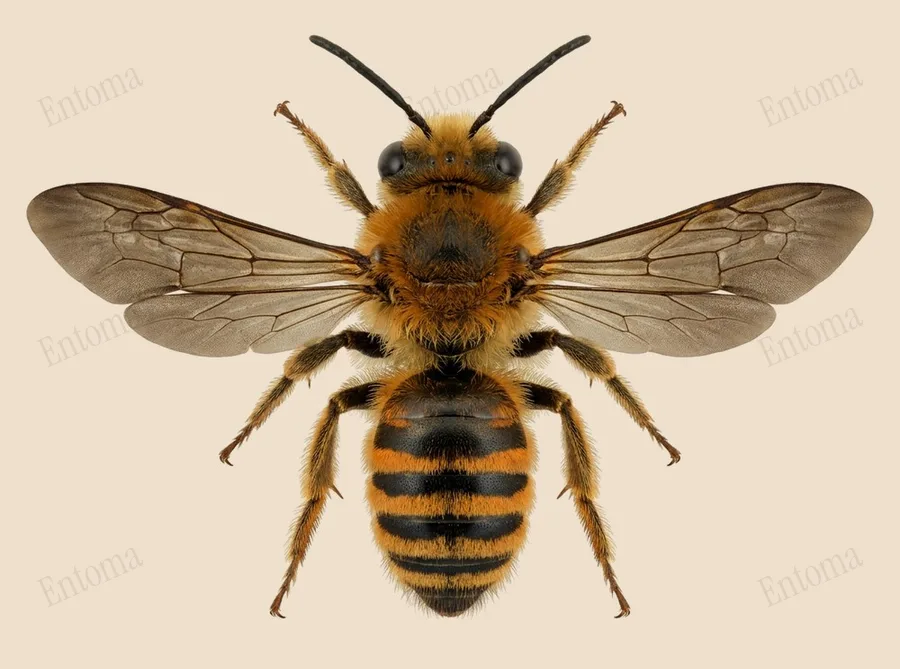
Ivy bee
Although it appears only in autumn, this solitary bee can nest in aggregations of tens of thousands of burrows packed into a few square meters of bare ground.
| Where | Gardens, hedgerows and sunny banks |
|---|---|
| Size | 10 to 13 mm body length |
| When | August to October |
The ivy bee is a solitary mining bee with a bright orange-brown, densely haired thorax and a striped abdomen, each segment edged with an orange hair band. Females are somewhat larger than males, and it is among the largest plasterer bees in Europe.
It nests in burrows dug into bare or sparsely vegetated ground, often forming dense aggregations of many individual nests close together. Each female provisions her own burrow with pollen collected almost entirely from ivy flowers.
Traits
Habitat
Garden
Colour
Orange, Brown
Active
Day
To people
Mild
Females can sting if handled roughly, but the sting is mild, much like a nettle sting, and stings are rare even around large nesting aggregations.
Activity through the year
Often confused with
Very similar in appearance, but it flies earlier in summer and visits heather flowers rather than ivy.
Questions
Is the Ivy bee dangerous to people?
Mild. Females can sting if handled roughly, but the sting is mild, much like a nettle sting, and stings are rare even around large nesting aggregations.
When can you see the Ivy bee?
The Ivy bee can be seen from August to October, by day.
Plate retouched from a photo by Jeff Jones, CC BY 4.0, iNaturalist Licence
Report a mistake in this entry
Bees, wasps and ants›Plasterer bees›Colletes
Last updated 2026-09-26. Every entry is checked against published sources.