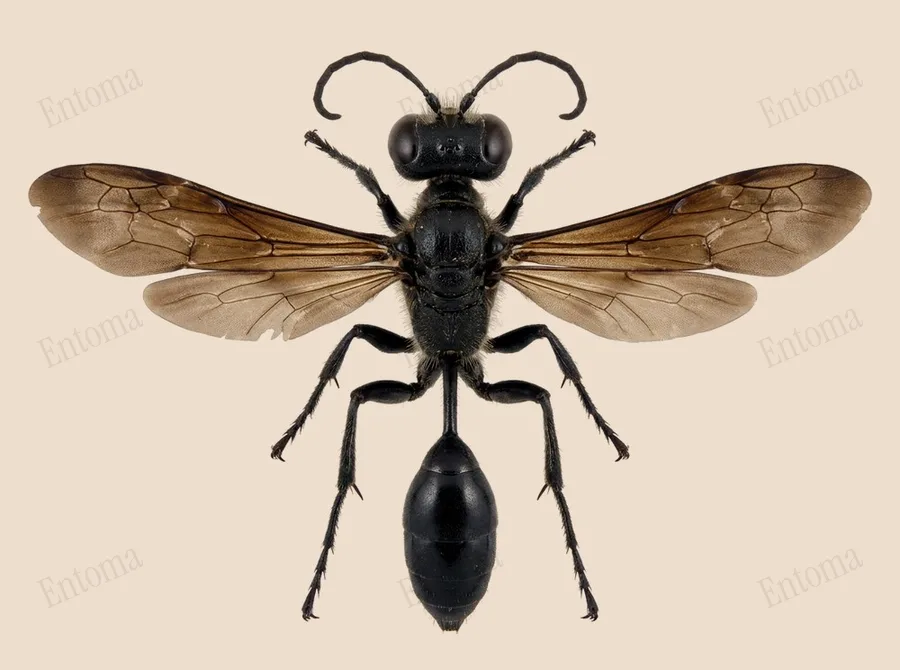
Mexican grass-carrying wasp
Females of this wasp stuff their nest cavities with blades of grass long enough to trail out of the entrance by several centimetres.
| Where | Gardens, walls and nesting cavities |
|---|---|
| Size | 15 to 20 mm body length |
| When | June to September |
This solitary wasp is entirely black with a hairy thorax and smoky brown wings, which it holds splayed out to the sides at rest rather than folded flat over the body.
Females nest in existing cavities such as hollow stems, old borings and even window tracks, packing each nest with grass and paralyzed crickets or katydids as food for their larvae. Males cannot sting and take no part in building the nest.
Traits
Habitat
Garden
Colour
Black, Brown
Active
Day
To people
Mild
Docile; females carry a sting but rarely use it unless grabbed, and males cannot sting at all.
Activity through the year
Often confused with
It folds its wings flat over its back at rest and hunts and buries bush-crickets rather than lining a cavity nest with grass.
Questions
Is the Mexican grass-carrying wasp dangerous to people?
Mild. Docile; females carry a sting but rarely use it unless grabbed, and males cannot sting at all.
When can you see the Mexican grass-carrying wasp?
The Mexican grass-carrying wasp can be seen from June to September, by day.
Plate retouched from a photo by Michal Maňas, CC BY 4.0, iNaturalist Licence
Report a mistake in this entry
Bees, wasps and ants›Thread-waisted wasps›Isodontia
Last updated 2026-09-26. Every entry is checked against published sources.