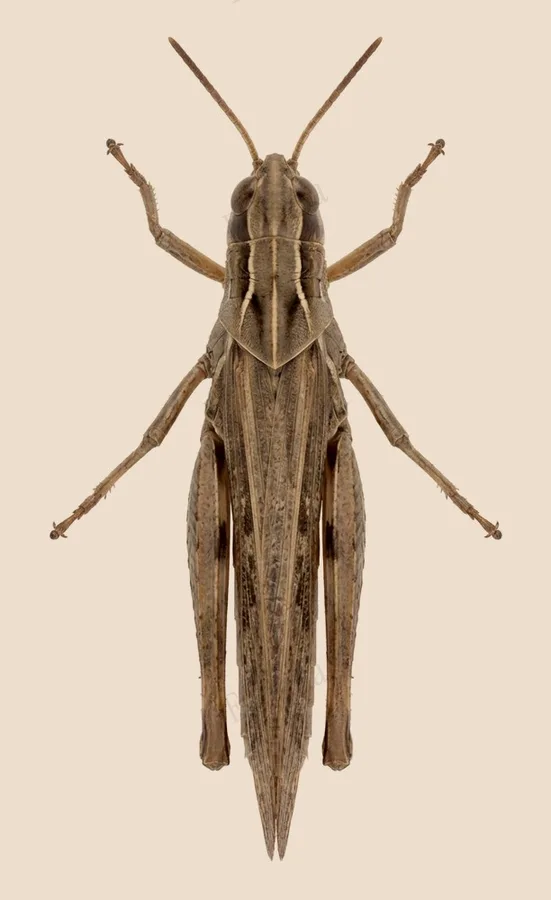
Common field grasshopper
This grasshopper sings by rubbing its hind legs against its forewings, producing short bursts of ticking chirps that carry across grassland on warm days.
| Where | Dry grassland, heathland and gardens |
|---|---|
| Size | 15 to 25 mm body length |
| When | June to October |
The common field grasshopper is mottled brown, sometimes with green or purple tinged individuals, and has a very hairy underside that helps separate it from similar species. Its pronotum bears keels that curve sharply inward, and its wings extend well past the tip of the abdomen, giving it stronger flight than many other grasshoppers.
Adults appear from June and remain active into October in dry, sunny grassland, gardens and waste ground, where they feed on grasses and low plants. Males sing by rubbing their hind legs against their forewings, producing short bursts of chirps to attract mates during the warmest part of the day.
Traits
Habitat
Grassland
Colour
Brown
Active
Day
To people
Does not bite or sting and poses no risk to people, sometimes landing on skin or clothing while foraging in grass.
Activity through the year
Often confused with
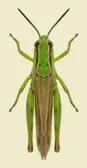
Similar in size at about 10 to 23 mm long, but has straighter pronotal keels and shorter wings that do not reach the tip of the abdomen, especially in females.
Questions
Is the Common field grasshopper dangerous to people?
Does not bite or sting and poses no risk to people, sometimes landing on skin or clothing while foraging in grass.
When can you see the Common field grasshopper?
The Common field grasshopper can be seen from June to October, by day.
Plate retouched from a photo by gwynmwilliams, CC BY 4.0, iNaturalist Licence
Report a mistake in this entry
Crickets and grasshoppers›Grasshoppers›Chorthippus
Last updated 2026-09-26. Every entry is checked against published sources.