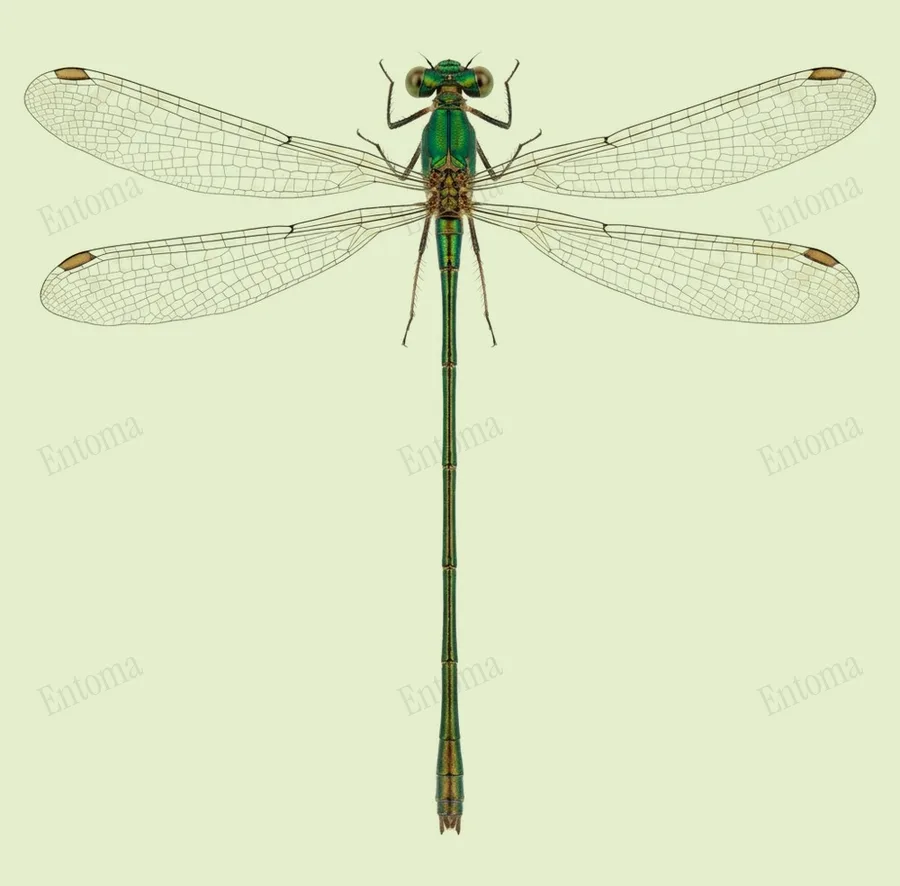
Western willow spreadwing
Females cut slits into live willow twigs overhanging water to lay their eggs, leaving scars that can be seen on the branch long after.
| Where | Still water with overhanging willows |
|---|---|
| Size | 39 to 48 mm body length |
| When | June to October |
The Western willow spreadwing is a metallic green damselfly that holds its wings out to the sides rather than folded over the body at rest, and it shows a large, pale creamy brown wing spot bordered by dark veins.
Adults are found around still water with overhanging trees, and females lay eggs by cutting slits into live willow or alder branches hanging above the water, a habit that leaves lasting scars on the bark.
Traits
Habitat
Wetland
Colour
Green, Metallic
Active
Day
To people
Often seen perched in waterside trees; it does not bite or sting people.
Activity through the year
Often confused with
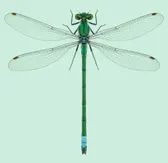
Notably smaller at about 26 to 33 mm abdomen length, and mature males show a powder blue frosting on the body that the Western willow spreadwing lacks.
Questions
Is the Western willow spreadwing dangerous to people?
Often seen perched in waterside trees; it does not bite or sting people.
When can you see the Western willow spreadwing?
The Western willow spreadwing can be seen from June to October, by day.
Plate retouched from a museum specimen photo by Marc Meyer, National Museum of Natural History, Luxembourg, CC0, GBIF Licence
Report a mistake in this entry
Dragonflies and damselflies›Spreadwings›Chalcolestes
Last updated 2026-09-26. Every entry is checked against published sources.