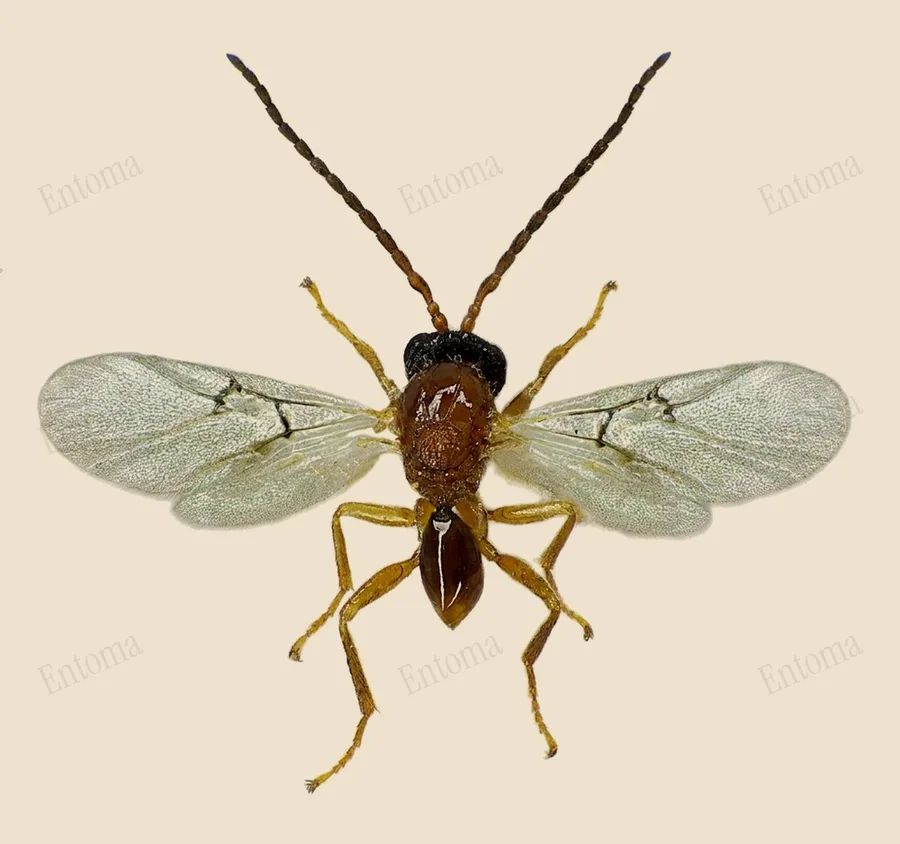
Oak apple gall wasp
This wasp's oak apple gall houses many larvae, but only this generation grows wings; the next develops wingless inside a hidden gall on the tree's roots.
| Where | Oak woodlands, farmland and gardens |
|---|---|
| Size | 2 to 3.5 mm body length, winged form |
| When | April to August, and again in December |
The winged adult of this generation is tiny, only 2 to 3.5 mm long, with a golden chestnut body and clear wings marked by dark veins and fine pale hairs. Males and females look alike and are usually first noticed near the base of an oak trunk shortly after leaving the large, spongy gall on a twig where they developed.
This species alternates between two very different generations each year. The winged generation shown here emerges from the familiar oak apple gall, mates, and the females then lay eggs on oak roots, where a separate wingless generation develops through the following months inside small, rarely noticed root galls before starting the cycle again the next spring.
Traits
Habitat
Woodland
Colour
Brown
Active
Day
To people
Harmless to people; the galls cause little lasting damage to the oak tree itself.
Activity through the year
Often confused with
Adults are dark brown to black rather than golden chestnut, and develop inside hard, round marble galls instead of the large spongy oak apple.
Questions
Is the Oak apple gall wasp dangerous to people?
Harmless to people; the galls cause little lasting damage to the oak tree itself.
When can you see the Oak apple gall wasp?
The Oak apple gall wasp can be seen from April to August, and again in December, by day.
Plate retouched from a photo by Siga, CC BY‑SA 3.0, Wikimedia Commons Licence
The plate on this page is shared under the same licence as its source, CC BY-SA.
Report a mistake in this entry
Bees, wasps and ants›Gall wasps›Biorhiza
Last updated 2026-09-26. Every entry is checked against published sources.