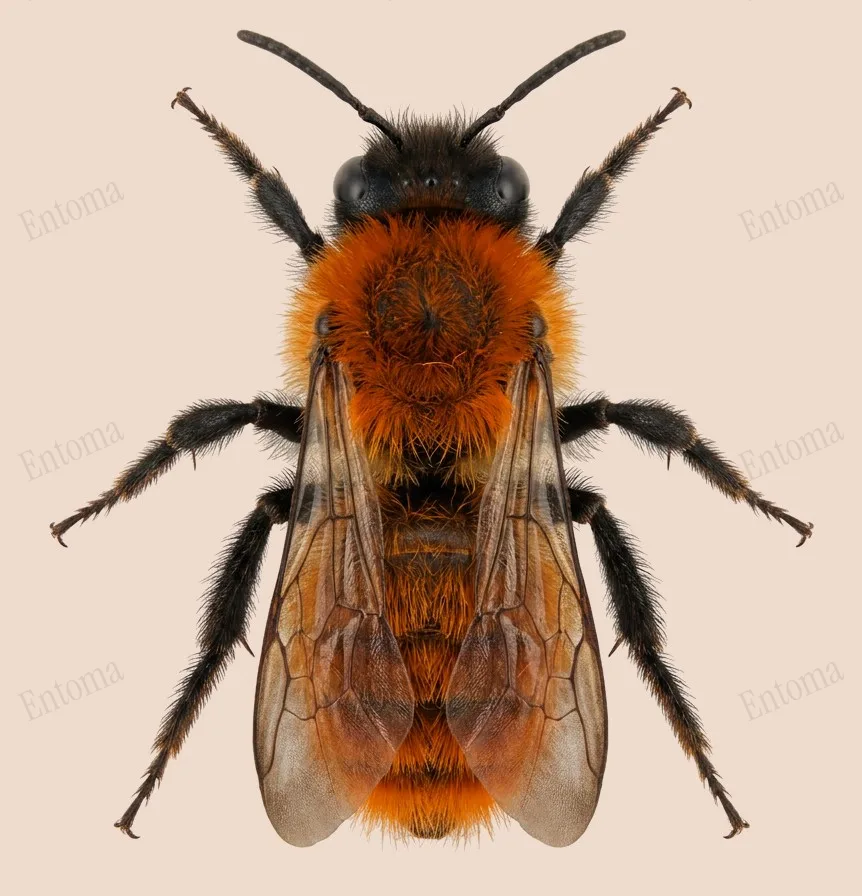
Tawny mining bee
Each spring, female Tawny Mining Bees dig their own nest burrow and pile the excavated soil into a small volcano-shaped mound on lawns.
| Where | Lawns, gardens and sandy soil |
|---|---|
| Size | 8 to 12 mm body length |
| When | March to May |
Female Tawny Mining Bees are thickly coated in bright fox-red hair across the thorax and abdomen, with black hair on the head and underside, while males are smaller and duller golden-brown with a tuft of white facial hair.
Females dig nest burrows in lawns and bare sandy soil, throwing up small mounds of excavated earth, and provision each cell with pollen for a single larva before sealing it. The mounds and adult bees disappear again within a few weeks as the spring generation finishes.
Traits
Habitat
Garden
Colour
Orange, Black
Active
Day
To people
Mild
Docile; females carry a sting but rarely use it, and it is too weak to break skin unless the bee is squeezed.
Activity through the year
Often confused with
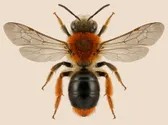
Its red hair is limited to the tip of an otherwise black abdomen, with a ginger thorax, rather than covering the whole thorax and abdomen as in the Tawny Mining Bee.
Questions
Is the Tawny mining bee dangerous to people?
Mild. Docile; females carry a sting but rarely use it, and it is too weak to break skin unless the bee is squeezed.
When can you see the Tawny mining bee?
The Tawny mining bee can be seen from March to May, by day.
Plate retouched from a photo by Jon Mortin, CC BY 4.0, iNaturalist Licence
Report a mistake in this entry
Bees, wasps and ants›Mining bees›Andrena
Last updated 2026-09-26. Every entry is checked against published sources.