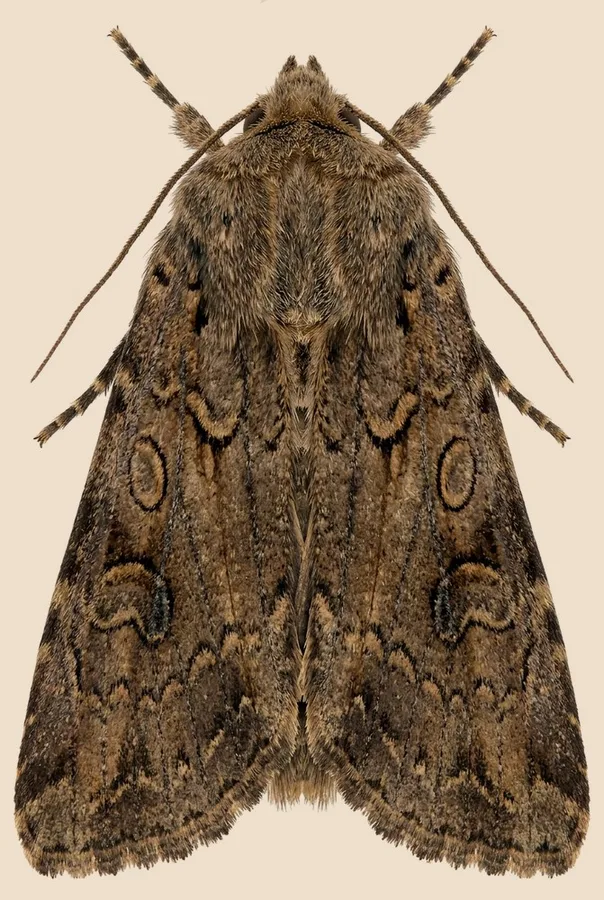
Turnip moth
Its underground larvae, called cutworms, sever seedling stems at the base and can ruin a row of vegetables in one night.
| Where | Farmland and gardens |
|---|---|
| Size | 32 to 40 mm wingspan |
| When | May to October |
The turnip moth is a variable brownish moth with a neat pale fringe and a narrow dark line near the edge of the forewing; the hindwings are pure white in males and pearly grey in females, a reliable way to tell the sexes apart.
Its larvae, known as cutworms, live in the soil and feed on the roots and stem bases of root vegetables and other cultivated plants, curling into a tight C shape when disturbed; the species is double brooded, with adults flying from late spring into early summer and again from late summer into autumn.
Traits
Habitat
Farmland
Colour
Brown, White, Grey
Active
Night
To people
It is not known to bite or sting people; its larvae are considered an agricultural pest because they cut down vegetable seedlings underground.
Activity through the year
Often confused with
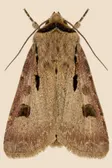
The heart and dart has a slightly larger wingspan of 35 to 44 mm against 32 to 40 mm in the turnip moth, and its hindwings are white to whitish with pale brown veining in both sexes rather than pure white in turnip moth males.
Questions
Is the Turnip moth dangerous to people?
It is not known to bite or sting people; its larvae are considered an agricultural pest because they cut down vegetable seedlings underground.
When can you see the Turnip moth?
The Turnip moth can be seen from May to October, at night.
Plate retouched from a photo by Donald Hobern from Copenhagen, Denmark, CC BY 2.0, Wikimedia Commons Licence
Report a mistake in this entry
Butterflies and moths›Owlet moths›Agrotis
Last updated 2026-09-26. Every entry is checked against published sources.