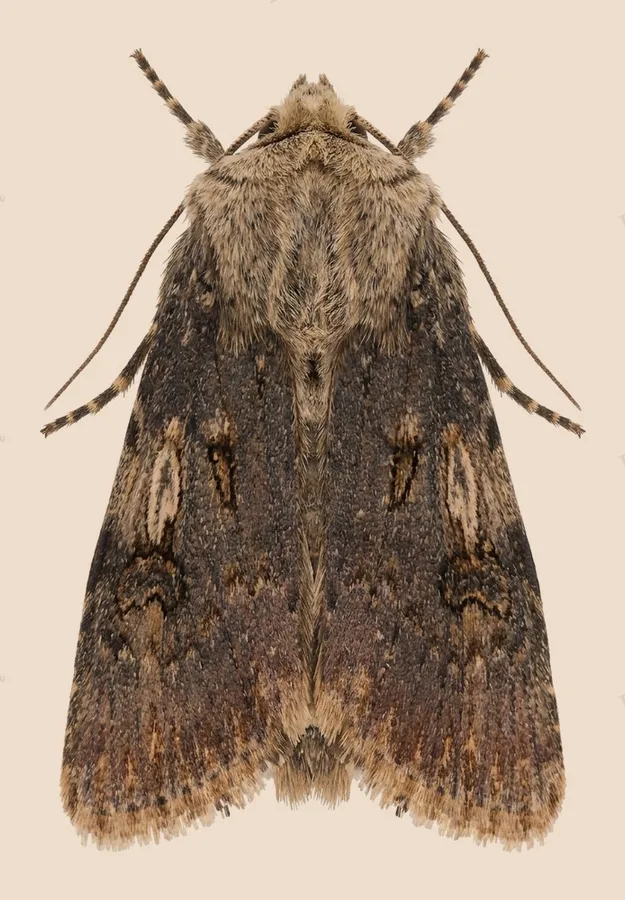
Shuttle-shaped dart
Males and females look almost like different species: males show patterned brown forewings and white hindwings, while females are plain dark brown all over.
| Where | Heathland, gardens, and coastal habitats |
|---|---|
| Size | 30 to 32 mm wingspan |
| When | April to October |
Males show variegated brownish forewings with white hindwings, while females have fairly plain dark brown forewings and buffish hindwings; markings on the forewing form a shuttle-like shape that gives the species its name, and the wingspan runs from about 30 to 32 mm.
Caterpillars feed on the leaves of herbaceous plants and grasses rather than on roots as most related species do, and with up to three generations a year the moth can be found on the wing from spring through autumn.
Traits
Habitat
Heath
Colour
Brown, White
Active
Night
To people
Harmless
Activity through the year
Often confused with
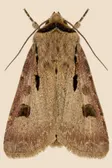
The heart and dart is larger, with a wingspan of 35 to 44 mm, and shows a heart-shaped mark alongside the dart mark on the forewing that the shuttle-shaped dart lacks.
Questions
Is the Shuttle-shaped dart dangerous to people?
The Shuttle-shaped dart is harmless to people.
When can you see the Shuttle-shaped dart?
The Shuttle-shaped dart can be seen from April to October, at night.
Plate retouched from a photo by Ben Sale from Stevenage, UK, CC BY 2.0, Wikimedia Commons Licence
Report a mistake in this entry
Butterflies and moths›Owlet moths›Agrotis
Last updated 2026-09-26. Every entry is checked against published sources.