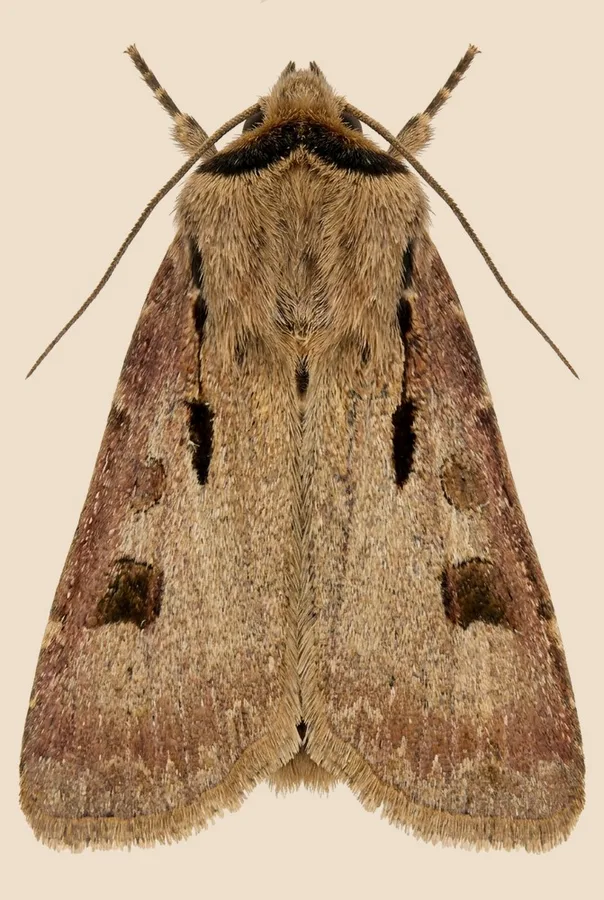
Heart and dart
Despite being named for the heart and dart markings on its forewings, the surest way to identify it is a solid black band across the front of its thorax.
| Where | Gardens, farmland and waste ground |
|---|---|
| Size | 35 to 40 mm wingspan |
| When | May to August |
Forewings range from pale sandy brown to near black and carry a kidney-shaped mark and a dart-shaped streak, but the most reliable feature is a solid black band across the front of the thorax, visible when the moth is viewed head-on.
Its caterpillars are cutworms that feed underground on the roots and stem bases of many wild and cultivated plants, overwintering nearly full grown before pupating in a soil chamber.
Traits
Habitat
Garden
Colour
Brown, White
Active
Night
To people
Harmless to people; caterpillars can damage garden and crop seedlings
Activity through the year
Often confused with
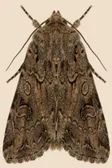
The turnip moth has much purer white or pearly grey hindwings and lacks the heart and dart's distinct black thoracic band.
Questions
Is the Heart and dart dangerous to people?
Harmless to people; caterpillars can damage garden and crop seedlings.
When can you see the Heart and dart?
The Heart and dart can be seen from May to August, at night.
Plate retouched from a photo by gailhampshire, CC BY 2.0, Wikimedia Commons Licence
Report a mistake in this entry
Butterflies and moths›Owlet moths›Agrotis
Last updated 2026-09-26. Every entry is checked against published sources.