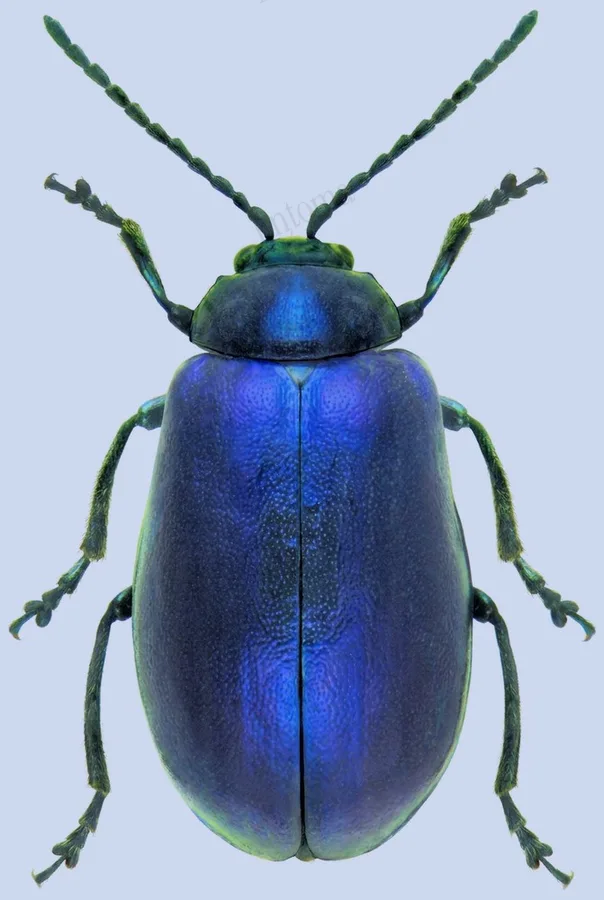
Alder leaf beetle
In parts of its range it vanished for decades and was thought lost, then returned and spread rapidly in the 2000s.
| Where | Alder trees by rivers, ponds and wet woodland |
|---|---|
| Size | 7 to 8 mm body length |
| When | March to September |
A small, oval beetle with a shiny, dark metallic blue body and a short, broad pronotum.
Adults and the dark, grub-like larvae both feed on alder leaves, and in local outbreaks can strip whole branches down to the leaf veins.
Winged adults overwinter and emerge in spring, and there is one generation a year. Alder is the main food plant, but the beetle is also found on hazel and hornbeam. The damage to leaves can look unsightly, but the trees usually tolerate it.
Traits
Habitat
Wetland
Colour
Blue, Black
Active
Day
To people
Harmless
Activity through the year
Often confused with
Blue mint beetle is larger and found only on mint plants, while the smaller alder leaf beetle sticks to alder.
Questions
Is the Alder leaf beetle dangerous to people?
The Alder leaf beetle is harmless to people.
When can you see the Alder leaf beetle?
The Alder leaf beetle can be seen from March to September, by day.
Sources rhs.org.ukcoleoptera.org.uken.wikipedia.org
Plate retouched from a photo by Udo Schmidt from Deutschland, CC BY‑SA 2.0, Wikimedia Commons Licence
The plate on this page is shared under the same licence as its source, CC BY-SA.
Report a mistake in this entry
Beetles›Leaf beetles›Agelastica
Last updated 2026-10-17. Every entry is checked against published sources.