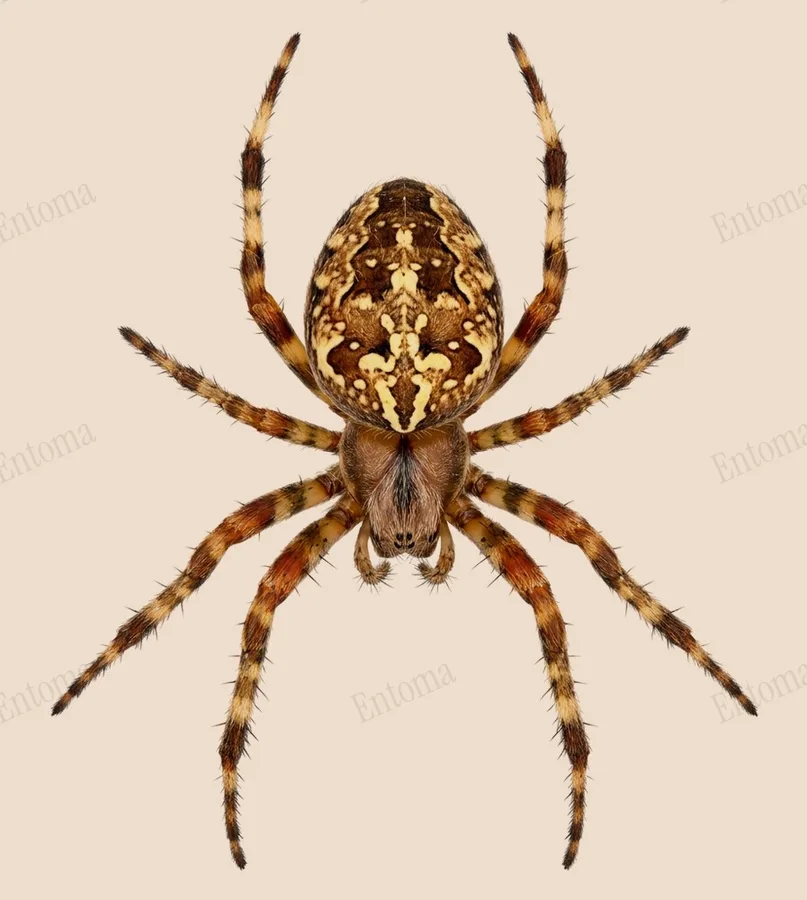
Gorse orbweaver
This small, densely hairy orb weaver produces a single generation a year, with spiderlings hatching in summer and overwintering before maturing the next spring.
| Where | Dry heathland, gorse and grassland |
|---|---|
| Size | Female 6.6 to 10.3 mm, male 4.6 to 6.2 mm body length |
| When | February to October |
The Gorse orbweaver is a small, densely hairy orb weaver with a brown to yellowish orange body marked by a dark longitudinal band down the abdomen and lighter transverse bands; some individuals also show pale spots along the sides. Its front body section is notably fuzzy compared to related orb weavers.
It lives on dry grassland, heathland and scrub, spinning its web among gorse, heather and other low bushes in warm, sunny spots. Eggs laid in summer hatch into spiderlings that overwinter before maturing the following spring, completing one generation a year.
Traits
Habitat
Heath
Colour
Brown, Orange
Active
Day and night
To people
Not dangerous to people; it stays in its web among gorse and heather and does not bite.
Activity through the year
Often confused with
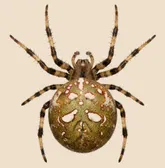
Distinctly larger (female body length 10.5 to 20.5 mm against the Gorse orbweaver's 6.6 to 10.3 mm) and marked with four sharp white spots on the abdomen rather than a mottled brown longitudinal stripe.
Questions
Is the Gorse orbweaver dangerous to people?
Not dangerous to people; it stays in its web among gorse and heather and does not bite.
When can you see the Gorse orbweaver?
The Gorse orbweaver can be seen from February to October, by day and at night.
Plate retouched from a museum specimen photo by Staatliche Naturwissenschaftliche Sammlungen Bayerns, CC BY 4.0, GBIF Licence
Report a mistake in this entry
Spiders›Orb-weaver spiders›Agalenatea
Last updated 2026-09-27. Every entry is checked against published sources.