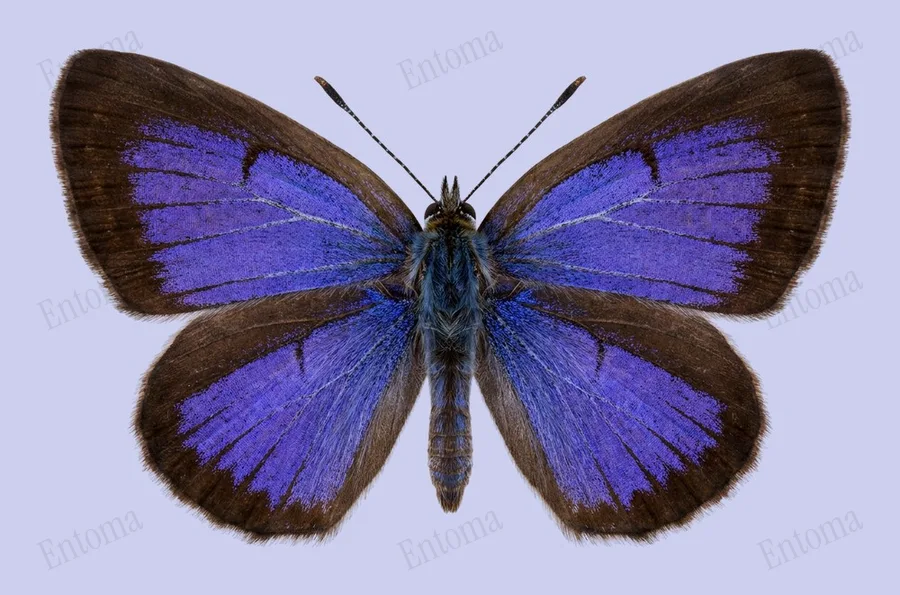
Lesser grass blue
The lesser grass blue flies low and feebly among roadside weeds, and males show a small white spot on each antennal club, a useful field mark.
| Where | Open grassy patches, gardens and roadsides |
|---|---|
| Size | 20 to 27 mm wingspan |
| When | January to December |
The lesser grass blue is one of the smallest blues, pale violet blue with a silvery sheen and a broad brown forewing border in males, while females are largely brown with violet blue suffusion at the wing bases; the grey underside carries small dark spots ringed in white.
Caterpillars feed on low legumes such as Desmodium and Alysicarpus growing as weeds, and the butterfly flutters feebly close to the ground in open sunlit grassy patches, gardens and roadside verges, visiting small flowers for nectar.
Traits
Habitat
Grassland
Colour
Blue, Brown, Grey
Active
Day
To people
Not known to bite or sting people.
Activity through the year
Often confused with
Distinctly smaller, at about 15 mm wingspan, and females are plain glossy brown above with no blue, unlike the lesser grass blue's violet-blue females.
Questions
Is the Lesser grass blue dangerous to people?
Not known to bite or sting people.
When can you see the Lesser grass blue?
The Lesser grass blue can be seen from January to December, by day.
Plate retouched from a museum specimen photo by Swiss Natural History Collections - SwissNatColl, CC BY 4.0, GBIF Licence
Report a mistake in this entry
Butterflies and moths›Blues and coppers›Zizina
Last updated 2026-09-27. Every entry is checked against published sources.