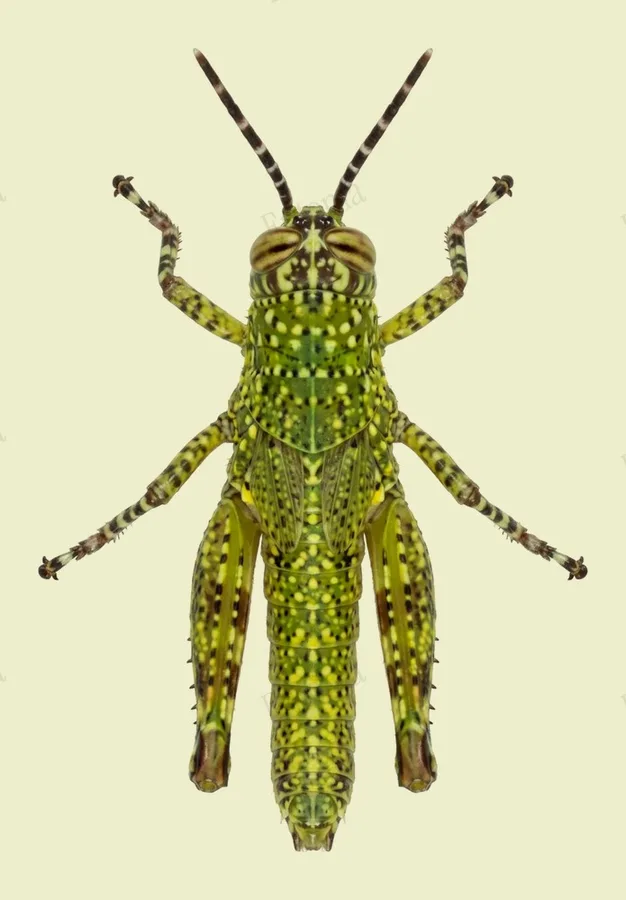
Rufous-legged grasshopper
This grasshopper's hind legs carry a rusty orange tint that gives it its common name, though the rest of the body can be plain brown or green.
| Where | Grassy roadsides, clearings and gardens |
|---|---|
| Size | Male 17.5 to 21 mm, female 22 to 28 mm body length |
| When | January to December |
The Rufous-legged Grasshopper is a medium-sized short-horned grasshopper with slender hind legs marked by broad black spots along the top, while the lower legs often show a rufous or yellowish tint that gives the species its common name. Overall body colour ranges from brown to green depending on the individual and its surroundings.
Adults and nymphs live among grasses and herbs in open, sunny places such as roadside verges, clearings and garden-like patches of vegetation, often at the edge of secondary forest. They feed on grasses and low plants and are active by day.
Traits
Habitat
Grassland
Colour
Brown, Orange, Black
Active
Day
To people
Feeds on grasses and herbs; not known to bite or sting people.
Activity through the year
Often confused with
Much larger and heavier bodied, with bluish black markings and hindwings that flash rose red in flight, unlike the smaller, plain brown or green Rufous-legged Grasshopper.
Questions
Is the Rufous-legged grasshopper dangerous to people?
Feeds on grasses and herbs; not known to bite or sting people.
When can you see the Rufous-legged grasshopper?
The Rufous-legged grasshopper can be seen from January to December, by day.
Plate retouched from a photo by portioid, CC BY 4.0, iNaturalist Licence
Report a mistake in this entry
Crickets and grasshoppers›Grasshoppers›Xenocatantops
Last updated 2026-09-27. Every entry is checked against published sources.