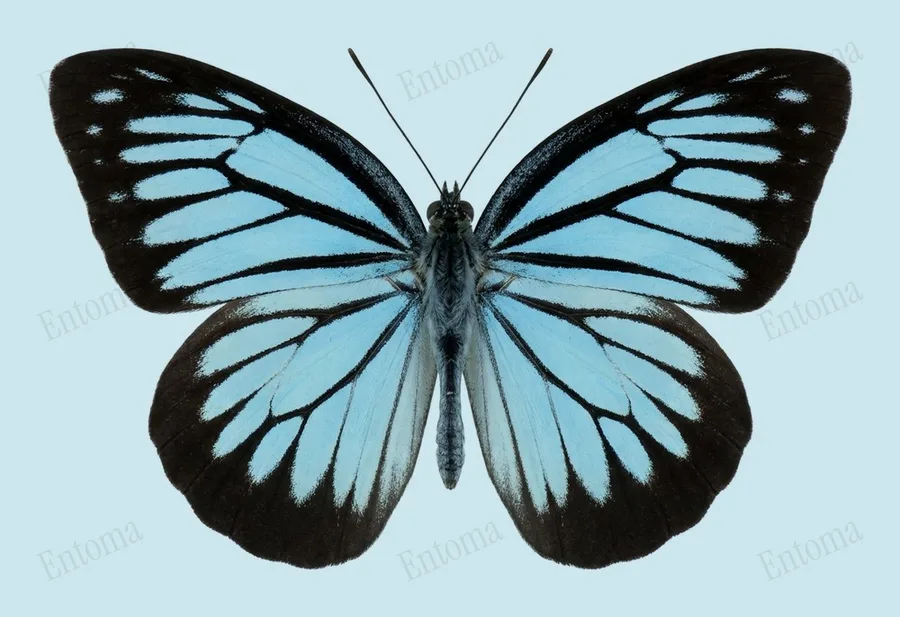
Common wanderer
Males of this pale blue butterfly wander widely over open country, while females come in two very different forms, one dark and one with a bright yellow base.
| Where | Hill forest, plantations and open country |
|---|---|
| Size | 50 to 60 mm wingspan |
| When | July and September to February and April |
The Common wanderer is a pale, sky blue butterfly with black wing veins and broad black borders, the male's blue paler and less extensive than in its larger relative, the Malayan wanderer. Females are variable, most a duller dark form and a rarer form with a bright yellow patch at the wing base.
Caterpillars feed on capers of the genus Capparis, and adults are strong, wide ranging fliers often seen crossing open country far from where they bred.
Traits
Habitat
Woodland
Colour
Blue, Black, White
Active
Day
To people
A strong flier often seen crossing open country far from forest; harmless to people.
Activity through the year
Often confused with
Males show a deeper, richer blue than the Common wanderer's paler sky blue, with broader black borders on both wings.
Questions
Is the Common wanderer dangerous to people?
A strong flier often seen crossing open country far from forest; harmless to people.
When can you see the Common wanderer?
The Common wanderer can be seen from July and September to February and April, by day.
Plate retouched from a photo by Afsar Nayakkan, CC BY 4.0, iNaturalist Licence
Report a mistake in this entry
Butterflies and moths›Whites and yellows›Pareronia
Last updated 2026-09-27. Every entry is checked against published sources.