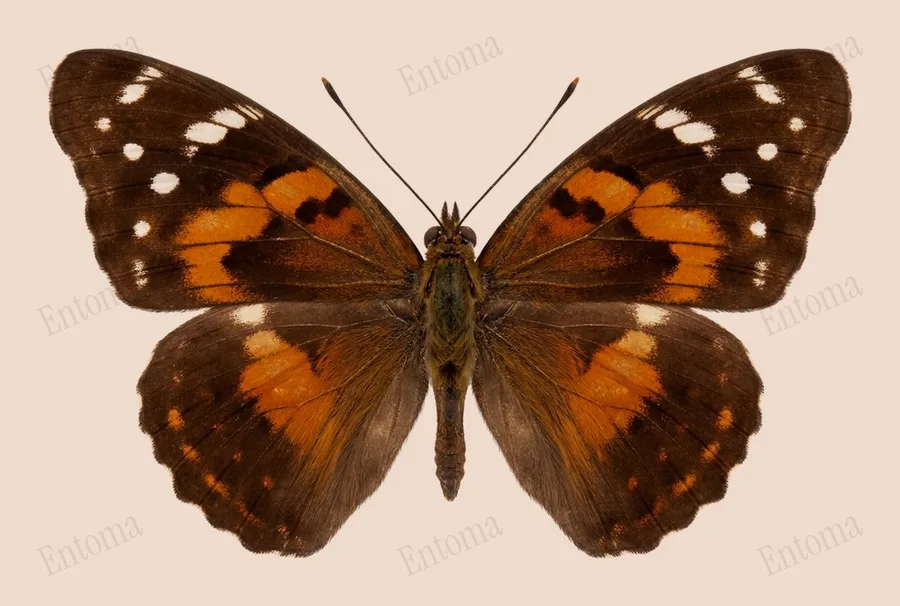
Chestnut bob
This skipper's fast, darting flight stays low over grass and forest edges, and its caterpillars feed on many kinds of grass and bamboo across South and Southeast Asia.
| Where | Forest edges, clearings and grassy roadsides |
|---|---|
| Size | 25 to 30 mm wingspan |
| When | January to December |
The Chestnut bob is a small, dark brown skipper with little difference between the sexes, though females show faint white spots on the forewing upperside that males lack. At rest it often holds its hindwings flat while raising the forewings upright, a posture typical of many skippers.
Caterpillars feed on a wide range of grasses and bamboos, and the species flies throughout the year wherever its host plants are available across its range.
Traits
Habitat
Woodland
Colour
Brown, White
Active
Day
To people
Stays low and close to the ground while feeding at small flowers; harmless to people.
Activity through the year
Often confused with
Upperside is blacker with less golden brown suffusion than the Chestnut bob, and shows extra small orange spots on the underside hindwing near the white markings.
Questions
Is the Chestnut bob dangerous to people?
Stays low and close to the ground while feeding at small flowers; harmless to people.
When can you see the Chestnut bob?
The Chestnut bob can be seen from January to December, by day.
Plate retouched from a museum specimen photo by Swiss Natural History Collections - SwissNatColl, CC BY 4.0, GBIF Licence
Report a mistake in this entry
Butterflies and moths›Skippers›Iambrix
Last updated 2026-09-27. Every entry is checked against published sources.