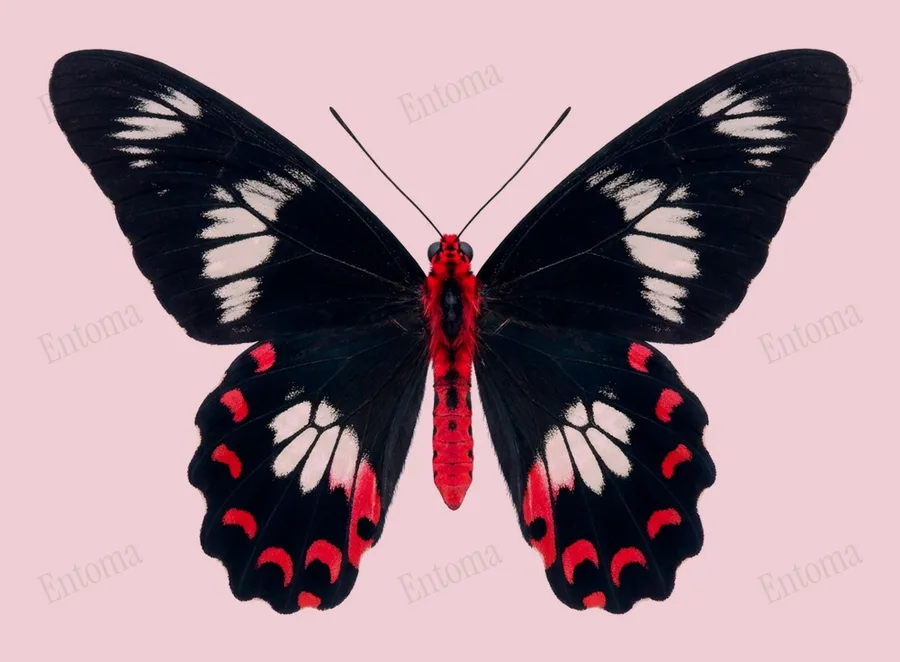
Crimson rose
Its red body and slow, gliding flight are not a display of confidence, they are a warning sign learned by predators after tasting the toxins the butterfly carries.
| Where | Forest, hillsides and flowering scrub |
|---|---|
| Size | 80 to 120 mm wingspan |
| When | January to December |
The Crimson rose is a black swallowtail with a bright crimson red head, thorax and abdomen, white patches across the forewing and hindwing, and a row of crimson spots on both wings including the forewing, unlike its close relative the Common rose swallowtail.
Caterpillars feed only on pipevines of the genus Aristolochia, taking up toxic compounds that stay with the butterfly into adulthood, with several generations produced each year.
Traits
Habitat
Woodland
Colour
Black, Red, White
Active
Day
To people
Mild
Bright warning colours advertise the toxins it carries from its host plants; safe to touch, though not to eat.
Activity through the year
Often confused with
Lacks red spots on the forewing, which is plain black with pale streaks, while the Crimson rose has red spots on both the forewing and hindwing.
Questions
Is the Crimson rose dangerous to people?
Mild. Bright warning colours advertise the toxins it carries from its host plants; safe to touch, though not to eat.
When can you see the Crimson rose?
The Crimson rose can be seen from January to December, by day.
Plate retouched from a museum specimen photo by Swiss Natural History Collections - SwissNatColl, CC BY 4.0, GBIF Licence
Report a mistake in this entry
Butterflies and moths›Swallowtails›Pachliopta
Last updated 2026-09-27. Every entry is checked against published sources.