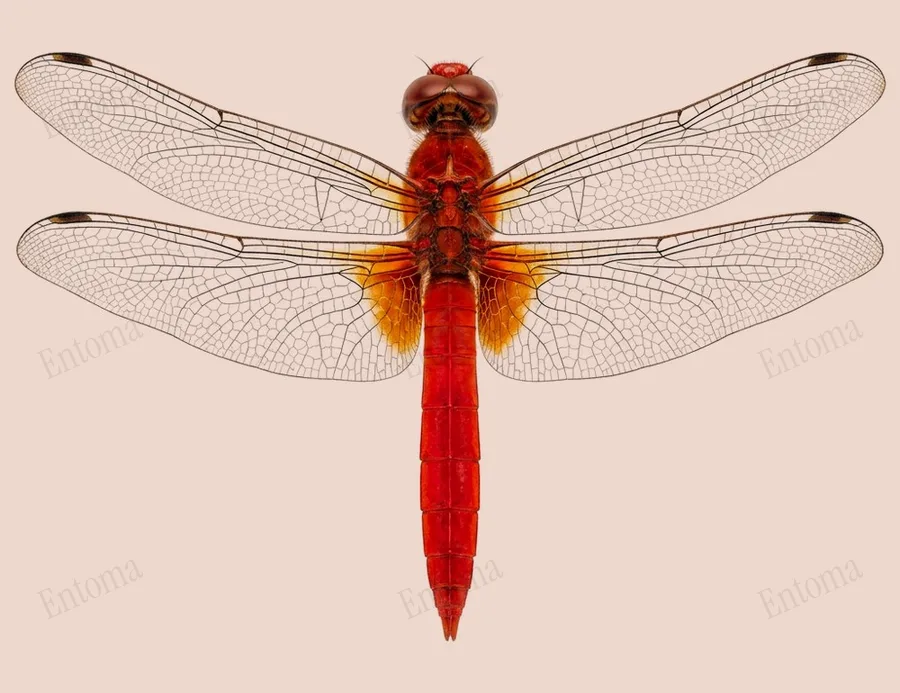
Orange skimmer
Newly emerged males of this dragonfly look almost identical to females, both olive green to brown, before slowly turning orange brown and vermilion red like mature males.
| Where | Ponds, drains, marshes and gardens |
|---|---|
| Size | 43 to 48 mm body length |
| When | January to December |
Mature males have an orange brown thorax and a bright vermilion red abdomen, with smoky, faintly amber tinted wings, while females and newly emerged males are olive green to brown with black markings and clearer wings.
It lives around standing water such as ponds, drains, marshes and slow rivers, where males perch and defend territory while females visit only briefly to mate and lay eggs.
Traits
Habitat
Wetland
Colour
Orange, Red, Brown
Active
Day
To people
Does not bite or sting people; harmless and commonly seen perched near ponds and drains.
Activity through the year
Often confused with
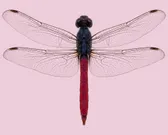
The Rufous-backed marsh hawk develops a whitish or pale blue-grey bloom over part of the thorax in mature males, whereas the Orange skimmer keeps a plain orange brown thorax without this powdery bloom.
Questions
Is the Orange skimmer dangerous to people?
Does not bite or sting people; harmless and commonly seen perched near ponds and drains.
When can you see the Orange skimmer?
The Orange skimmer can be seen from January to December, by day.
Plate retouched from a photo by Wolfgang Ahlmer, CC BY 4.0, iNaturalist Licence
Report a mistake in this entry
Dragonflies and damselflies›Skimmers›Orthetrum
Last updated 2026-09-27. Every entry is checked against published sources.