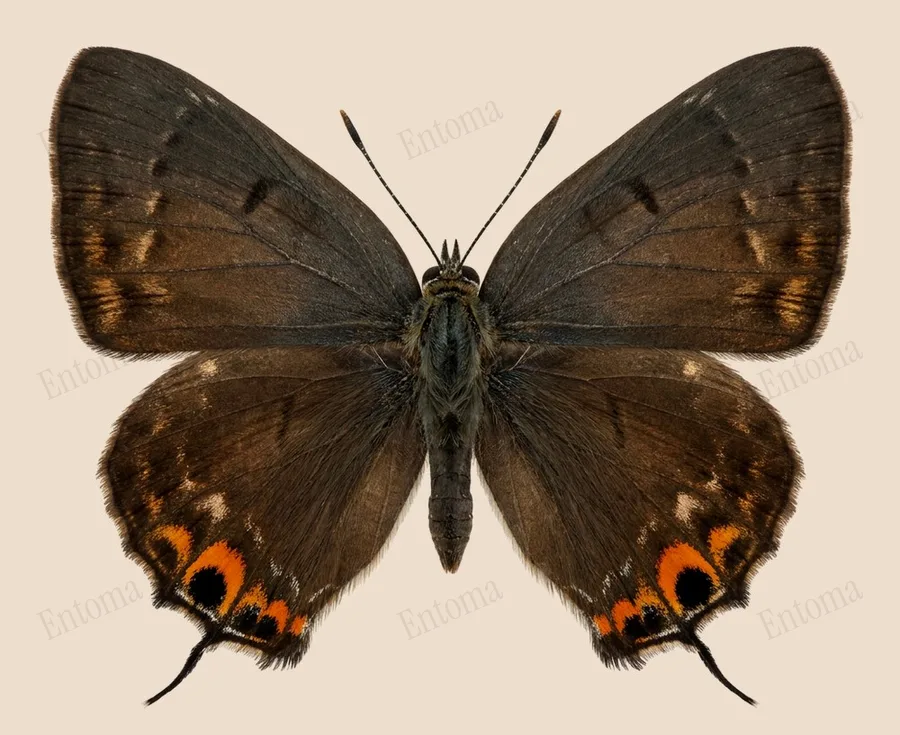
Common tit
Newly hatched caterpillars of this butterfly are carried off by weaver ants soon after eating their own eggshell, beginning an association that lasts through their growth.
| Where | Mangroves, coastal parks and gardens |
|---|---|
| Size | 27 to 32 mm wingspan |
| When | January to December |
Males are deep purple to shining blue above with a black patch of scent scales on each forewing, while females are dull brown with two large black spots crowned in white near the hindwing margin. Both sexes have two short, white tipped tails on each hindwing.
Caterpillars feed on a wide range of plants and are tended by weaver ants, which protect them in exchange for sweet secretions from a gland on the larva's back.
Traits
Habitat
Garden
Colour
Blue, Brown, Orange
Active
Day
To people
Does not bite or sting; a small, harmless butterfly often seen sunbathing with wings open.
Activity through the year
Often confused with
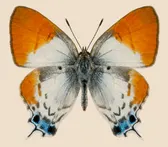
The Fluffy tit has a conspicuous tuft of fluffy white hair tipped scales at the base of its tails and a more contrasting pale patch near the wing base, unlike the plainer hindwing of the Common tit.
Questions
Is the Common tit dangerous to people?
Does not bite or sting; a small, harmless butterfly often seen sunbathing with wings open.
When can you see the Common tit?
The Common tit can be seen from January to December, by day.
Plate retouched from a museum specimen photo by Swiss Natural History Collections - SwissNatColl, CC BY 4.0, GBIF Licence
Report a mistake in this entry
Butterflies and moths›Blues and coppers›Hypolycaena
Last updated 2026-09-27. Every entry is checked against published sources.