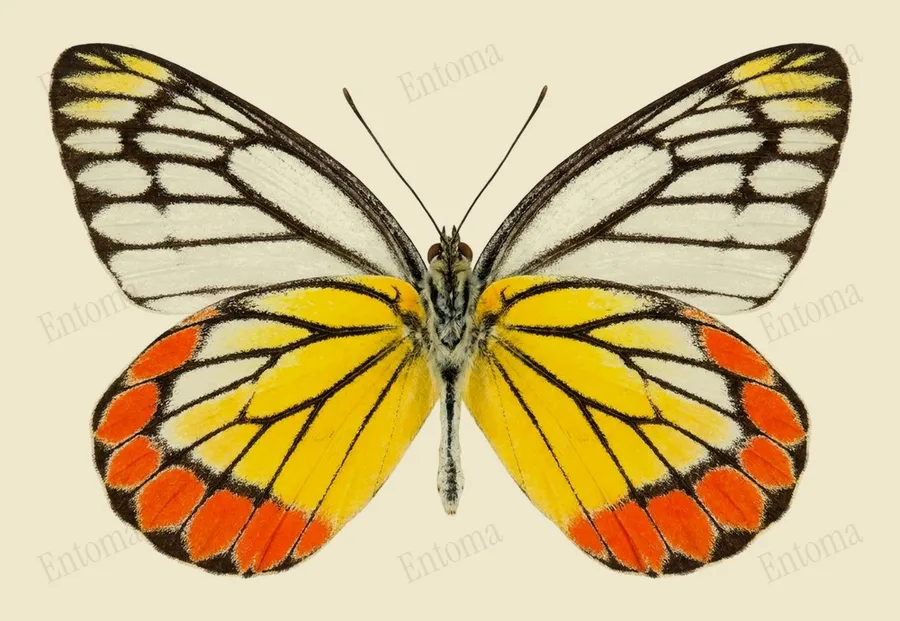
Common jezebel
Common jezebel caterpillars feed on toxic mistletoe plants, making the adult butterfly so unpalatable to birds that it is rarely attacked despite its bright warning colours.
| Where | Forests, woodlands and gardens with mistletoe |
|---|---|
| Size | 65 to 85 mm wingspan |
| When | January to December |
The common jezebel is a striking pierid with a white upperside crossed by broad black wing veins and a black postdiscal band, more heavily marked in females; the underside hindwing is bright yellow with a black border enclosing large white-ringed, arrowhead shaped red spots, making the butterfly far more colourful at rest than in flight.
Caterpillars feed gregariously on parasitic mistletoes growing on trees such as Indian coral tree and other hosts, accumulating toxins that make the adults distasteful to birds, and the species breeds throughout the year in forests, woodlands and gardens wherever mistletoe grows, from the plains up to about 2100 metres.
Traits
Habitat
Woodland
Colour
White, Yellow, Red
Active
Day
To people
Mild
Not touched by people; unpalatable to predators rather than harmful to handle.
Activity through the year
Often confused with
Orange red hindwing spots are squarish rather than the arrowhead shaped spots of the common jezebel, though the two mimic each other closely overall.
Questions
Is the Common jezebel dangerous to people?
Mild. Not touched by people; unpalatable to predators rather than harmful to handle.
When can you see the Common jezebel?
The Common jezebel can be seen from January to December, by day.
Plate retouched from a museum specimen photo by Swiss Natural History Collections - SwissNatColl, CC BY 4.0, GBIF Licence
Report a mistake in this entry
Butterflies and moths›Whites and yellows›Delias
Last updated 2026-09-27. Every entry is checked against published sources.