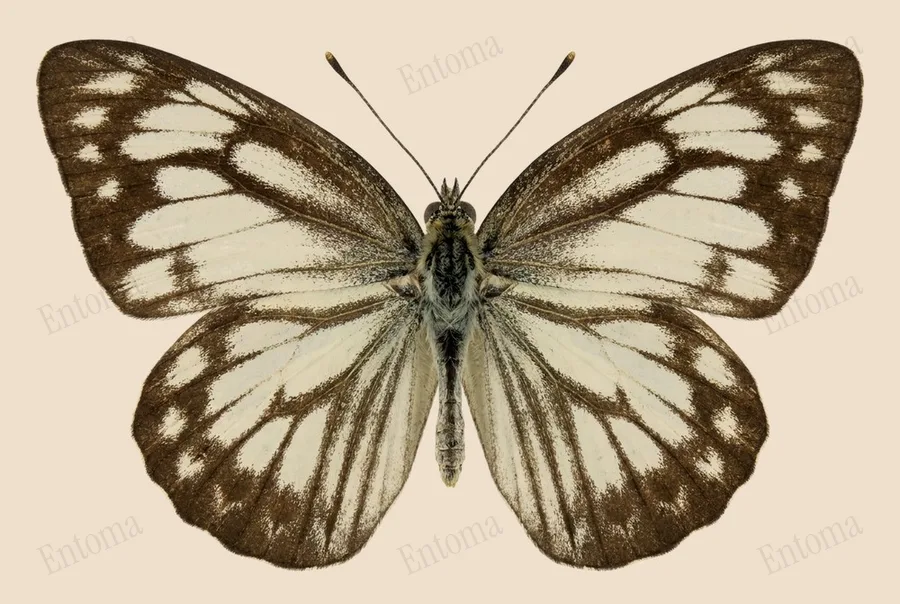
Common gull
Its markings turn noticeably paler in the dry season and darker again once the rains return, a seasonal change shared by both males and females.
| Where | Thorn scrub and open woodland |
|---|---|
| Size | 40 to 50 mm wingspan |
| When | January to December |
The Common gull is white to pale yellow with black veins and black edging along the wingtips, broader and more extensive in females than in males, and males show a faint grey blue shading near the wing bases. It opens its wings mainly in early morning sun before becoming a fast, restless flier.
Caterpillars feed on shrubs and small trees in the caper family, including Capparis and Crateva species, in thorn scrub, open woodland and dry forest edges, and adults visit damp ground in groups to puddle for minerals.
Traits
Habitat
Woodland
Colour
White, Black, Grey
Active
Day
To people
Puddles at damp patches in groups; safe to touch.
Activity through the year
Often confused with
Underside washed with chrome yellow in the wet season, rather than the plain white to pale yellow underside marked only with black wingtip patterning seen on the Common gull.
Questions
Is the Common gull dangerous to people?
Puddles at damp patches in groups; safe to touch.
When can you see the Common gull?
The Common gull can be seen from January to December, by day.
Plate retouched from a photo by John Witton, CC BY 4.0, iNaturalist Licence
Report a mistake in this entry
Butterflies and moths›Whites and yellows›Cepora
Last updated 2026-09-27. Every entry is checked against published sources.